
Modern British Menswear
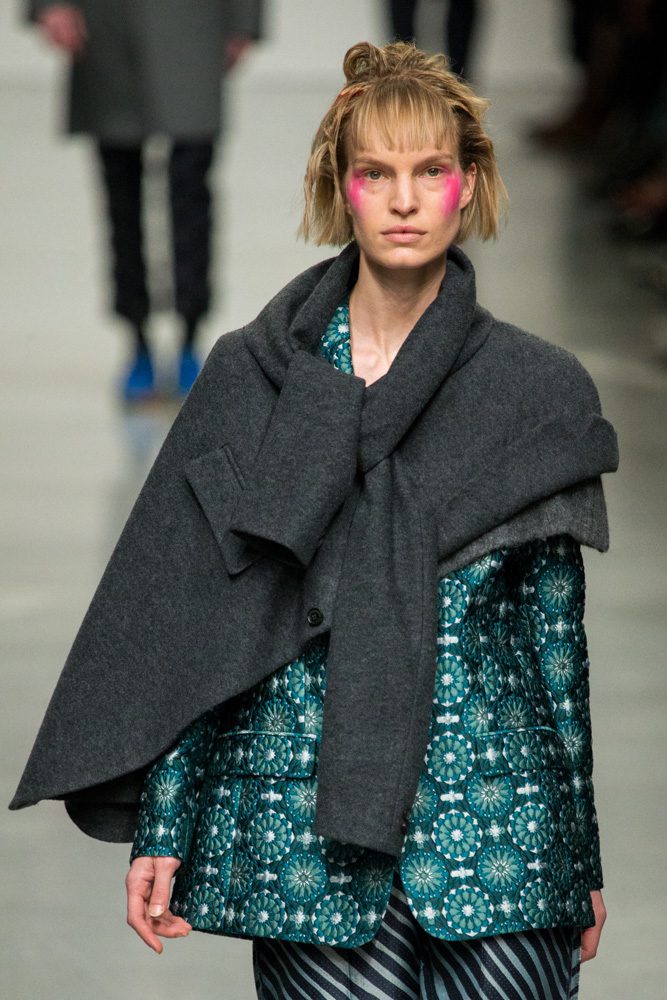
Casely-Hayford brought a distinctly modern interpretation of British menswear to London Fashion Week Men’s, combining the discipline of tailoring with oversized proportions, sportswear influences and unexpected shifts in texture. Designed by father-and-son duo Joe and Charlie Casely-Hayford, the collection explored the house’s established tailoring vocabulary while pushing it into more relaxed and experimental territory. Contemporary coverage described the central idea as “volume transitioning”, reflecting the way proportion became one of the defining features of the collection.
The New British Silhouette
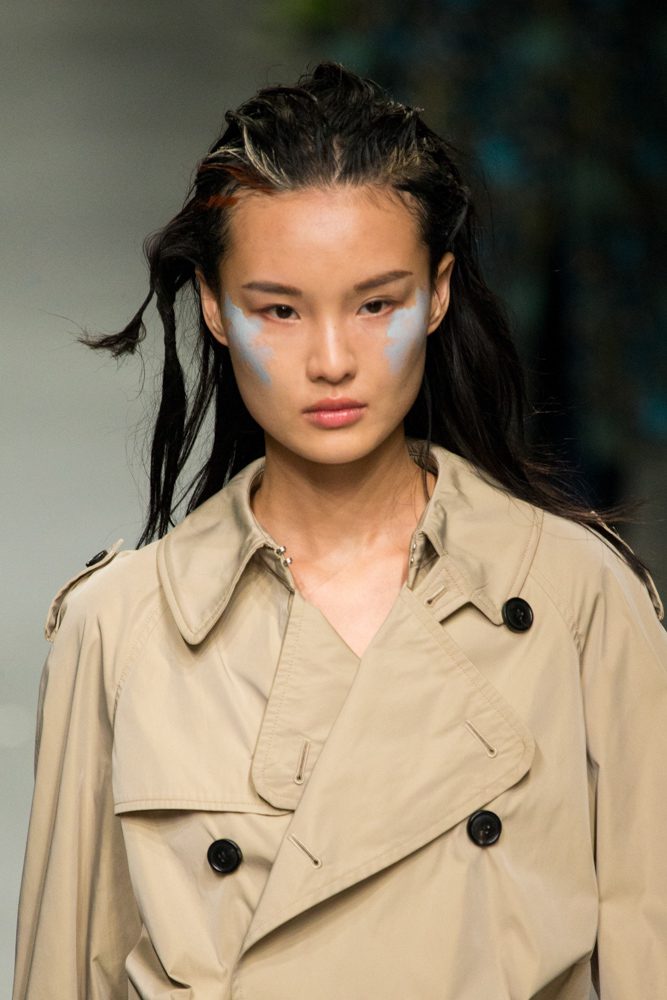
The collection demonstrated how traditional British tailoring can be altered without losing its identity. Structured pieces were expanded, softened or disrupted, creating a wardrobe that moved between formal tailoring and contemporary everyday dressing. Oversized coats and generous trousers established a relaxed silhouette, while more fitted pieces provided contrast. The relationship between these different proportions gave the collection its visual rhythm, narrow against wide, structured against fluid, traditional against experimental.
Outerwear Takes Centre Stage
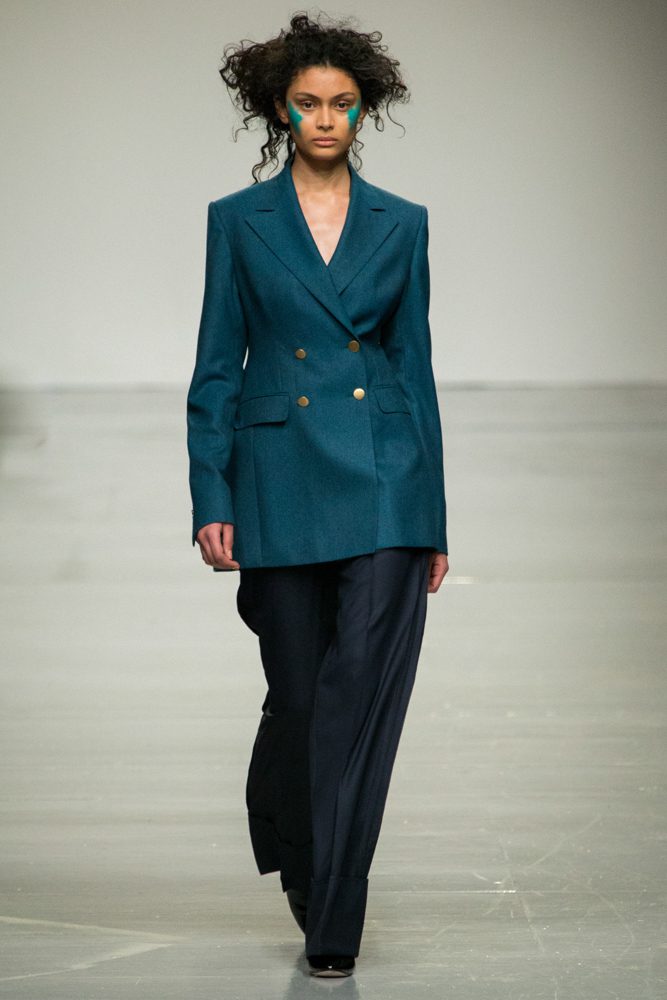
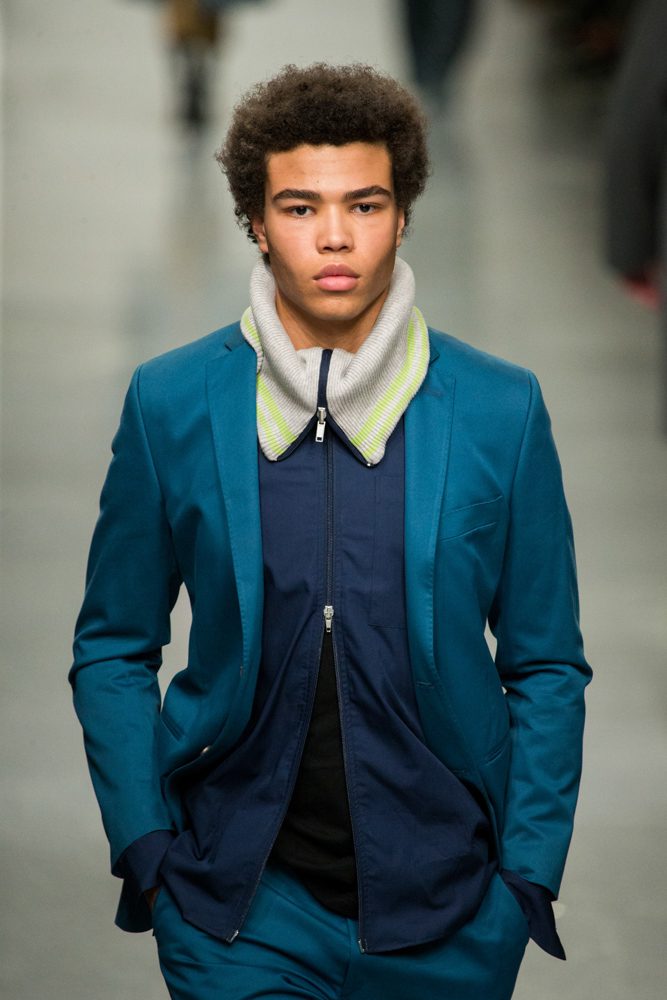
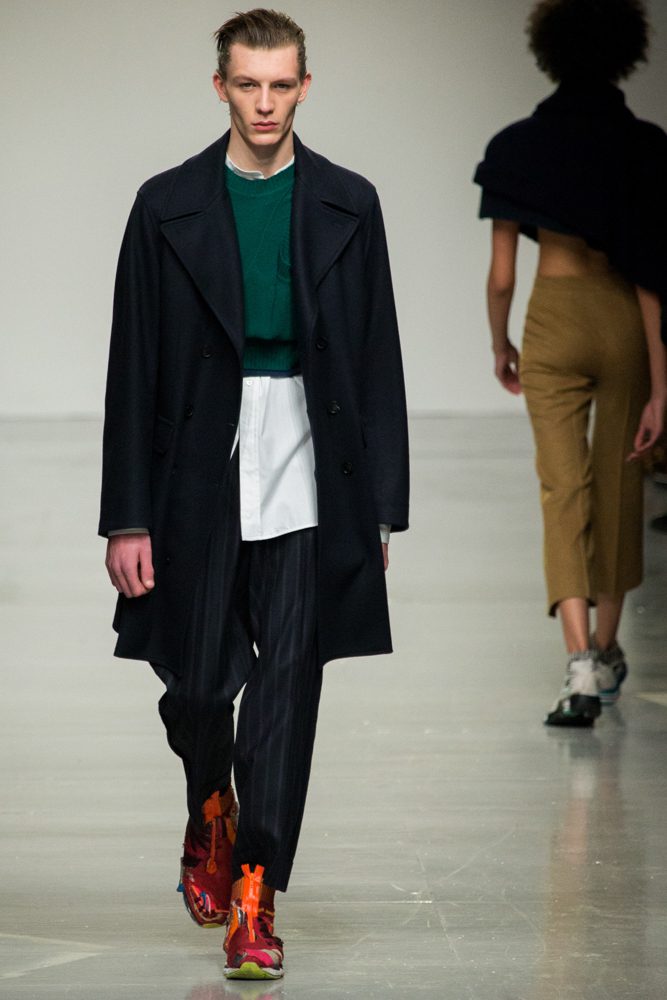
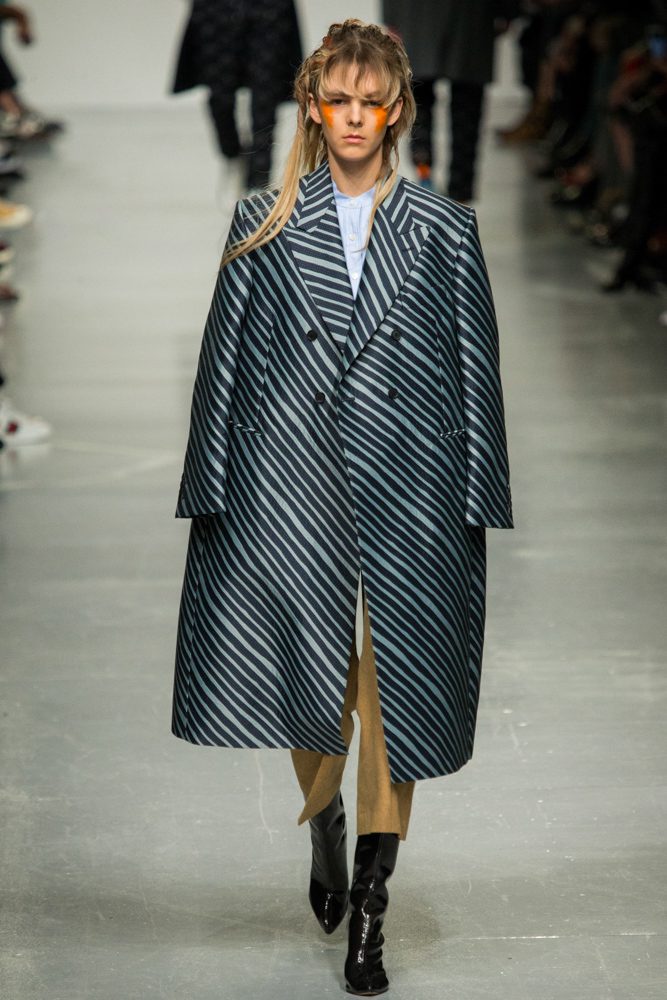
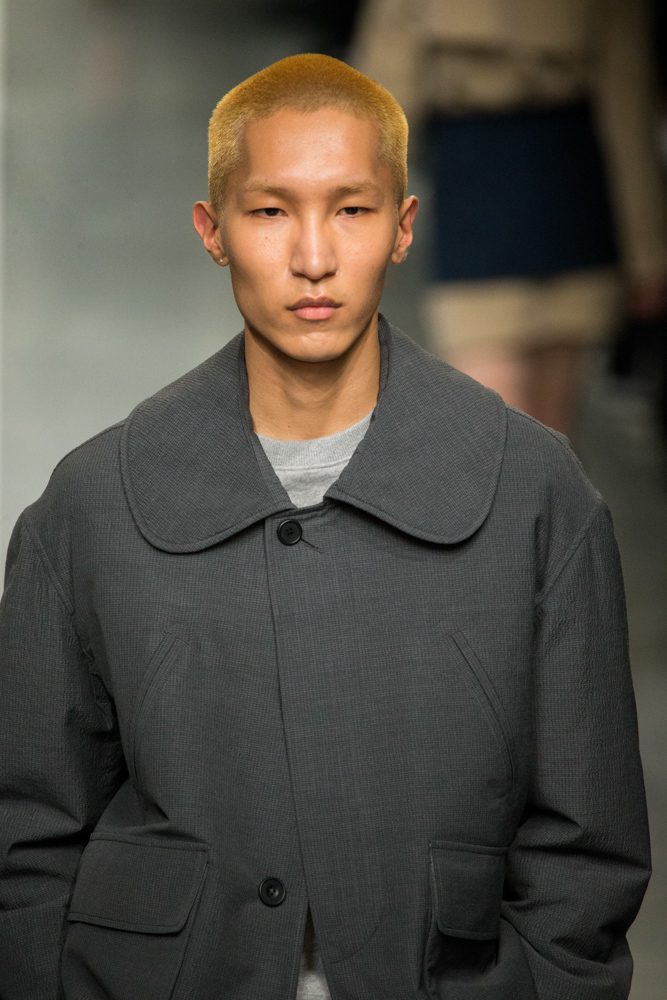
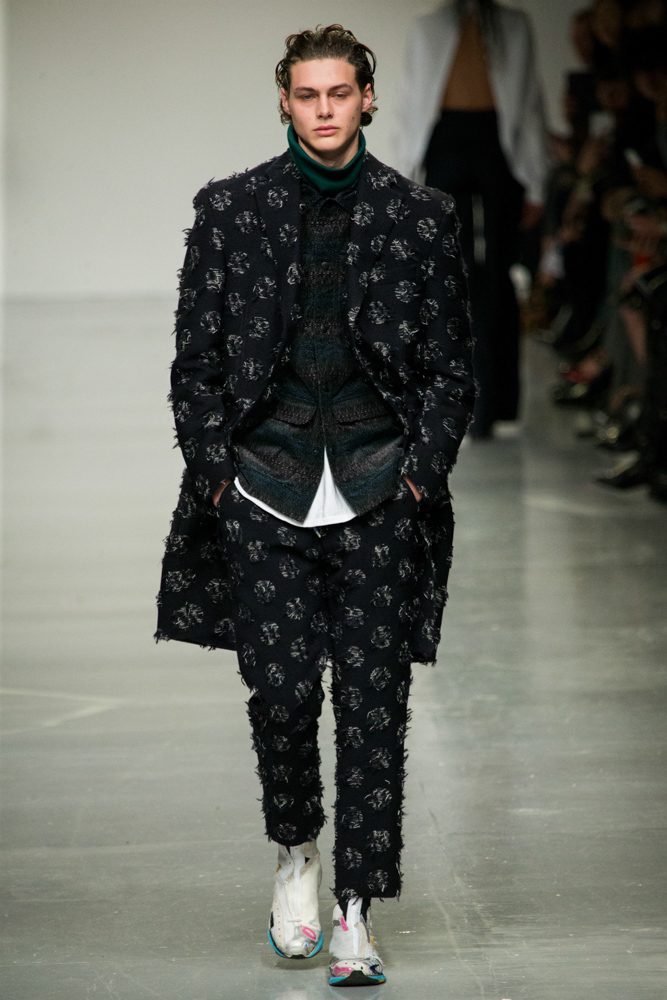
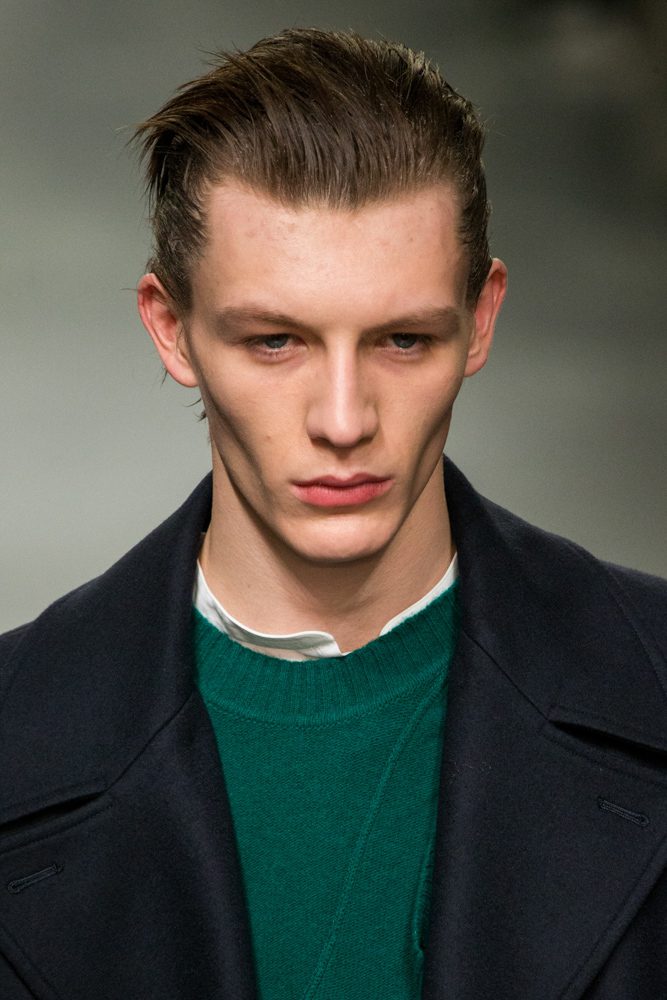
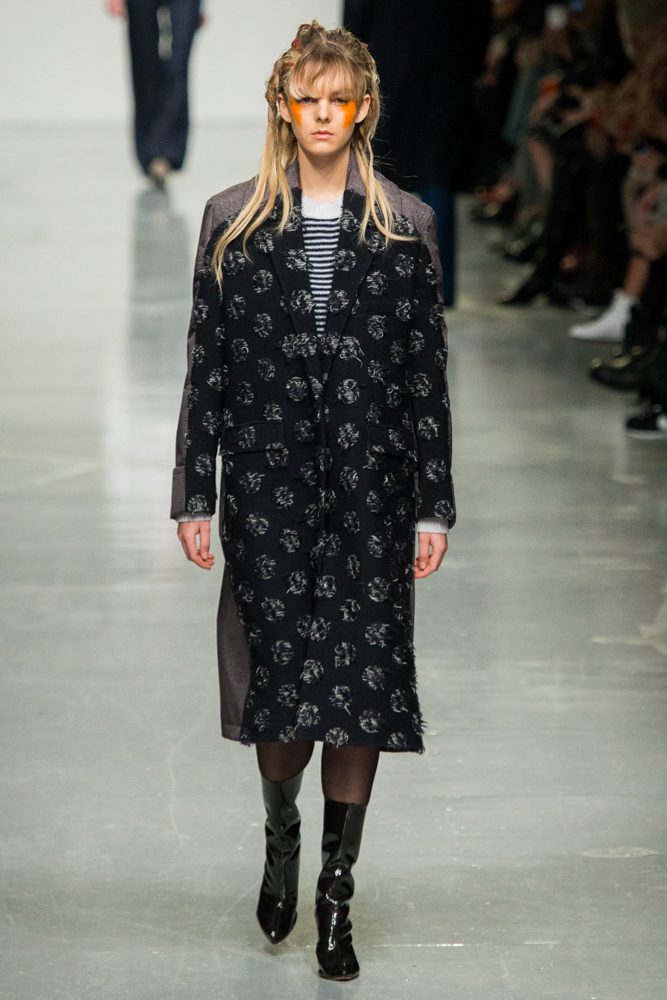
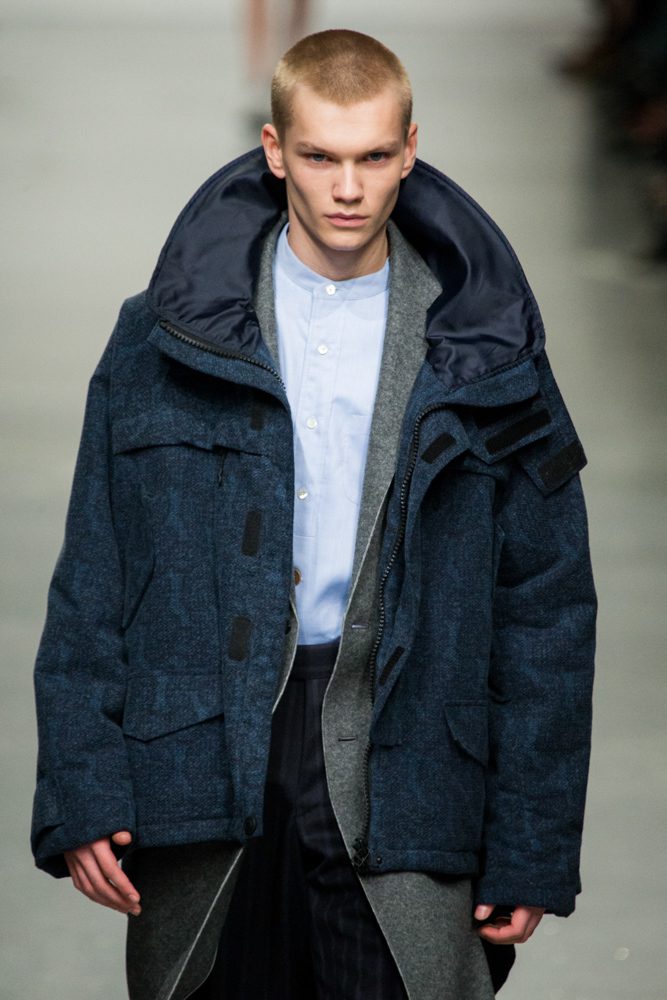
Outerwear was among the strongest elements of the collection. A tonal blue and near-black parka featured an abstract circular print, an exaggerated fishtail and a distinctive sculptural collar, while another anthracite coat introduced a broad curved collar with a distinctly retro character. These coats demonstrated Casely-Hayford’s ability to take familiar menswear staples and change their personality through proportion and construction. The coat became more than a functional layer; it became the defining architectural element of the silhouette.
Volume and Proportion
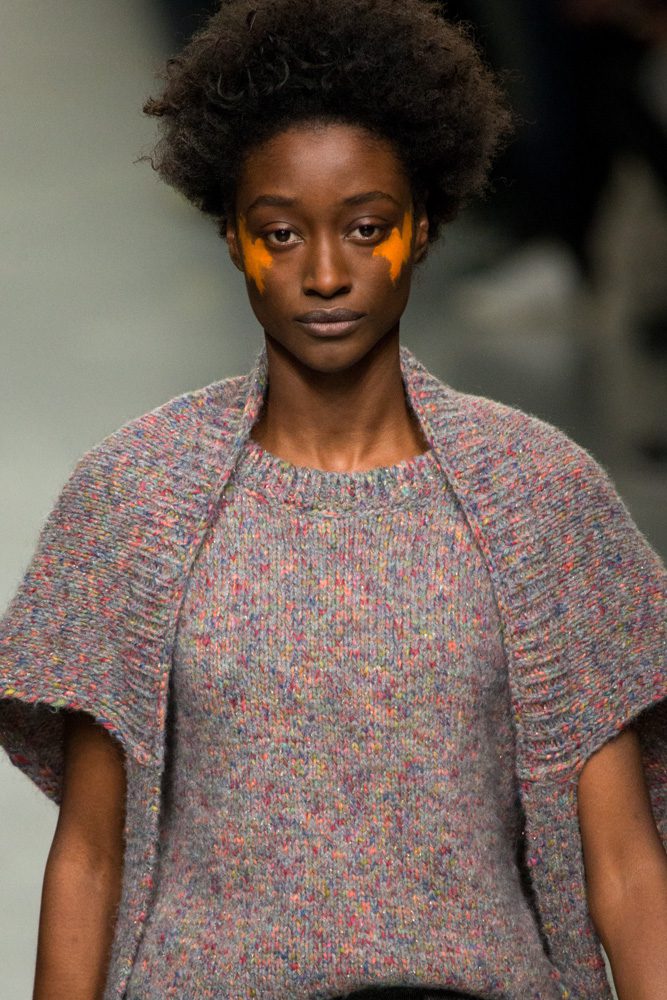
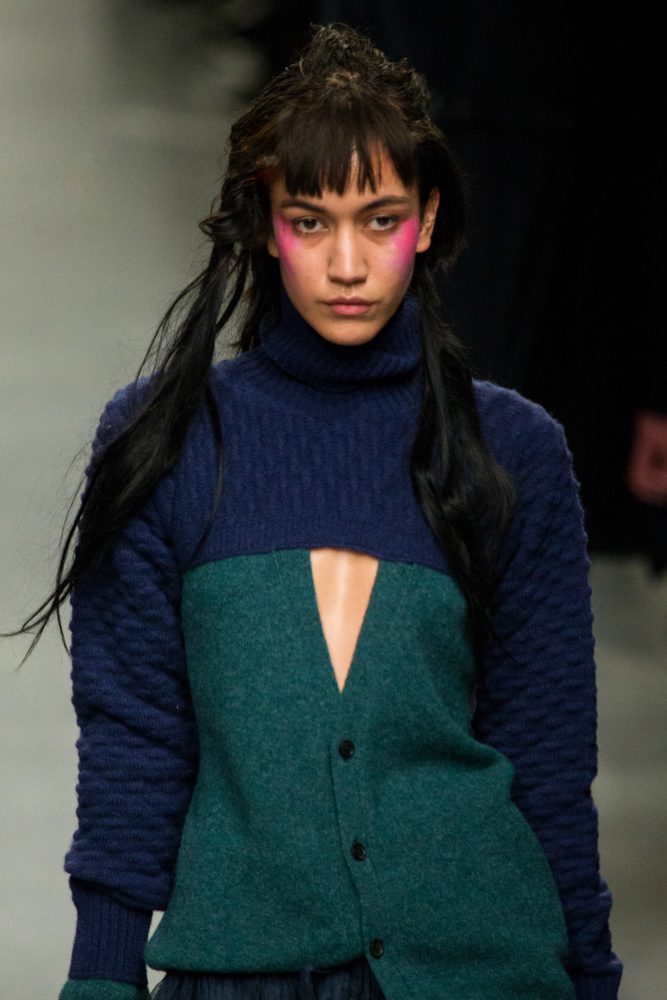
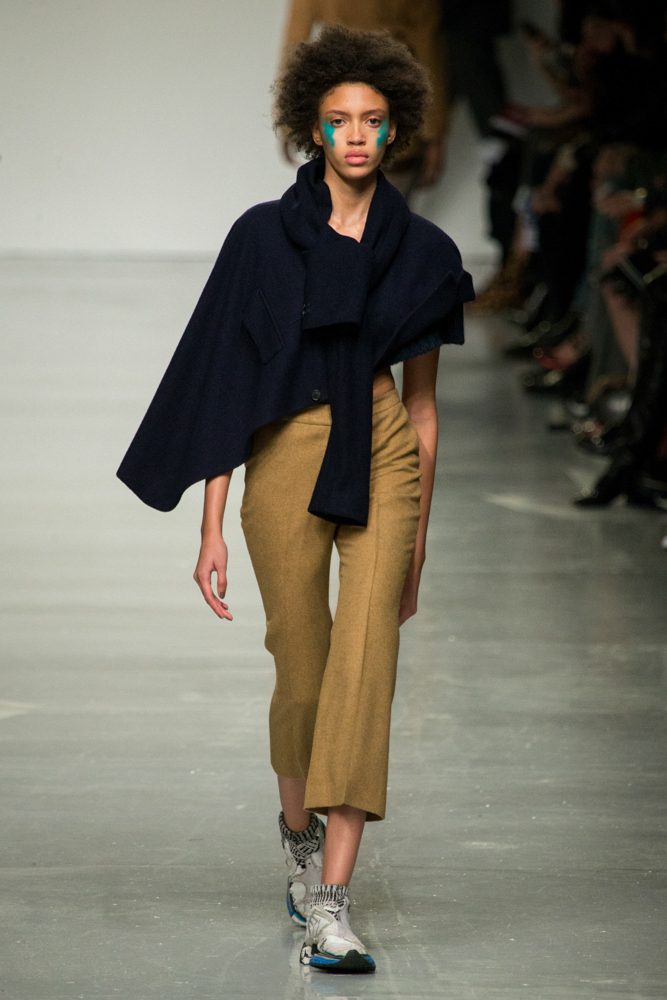
Volume was central to the collection. Large overcoats were paired with more controlled trousers and tailoring, creating a deliberate contrast between the scale of the upper and lower body. Sweaters could become coats, while coats could be draped over the shoulders almost like oversized cardigans. This play with function and proportion gave the collection a sense of movement, encouraging the wearer to rethink how familiar garments could be worn.
Tailoring Reimagined
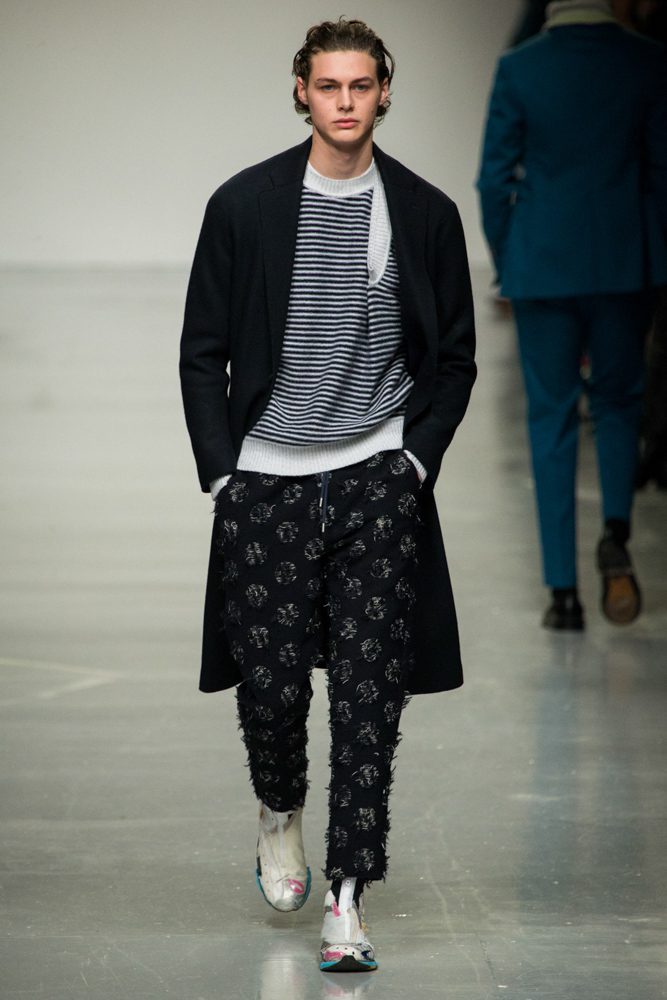
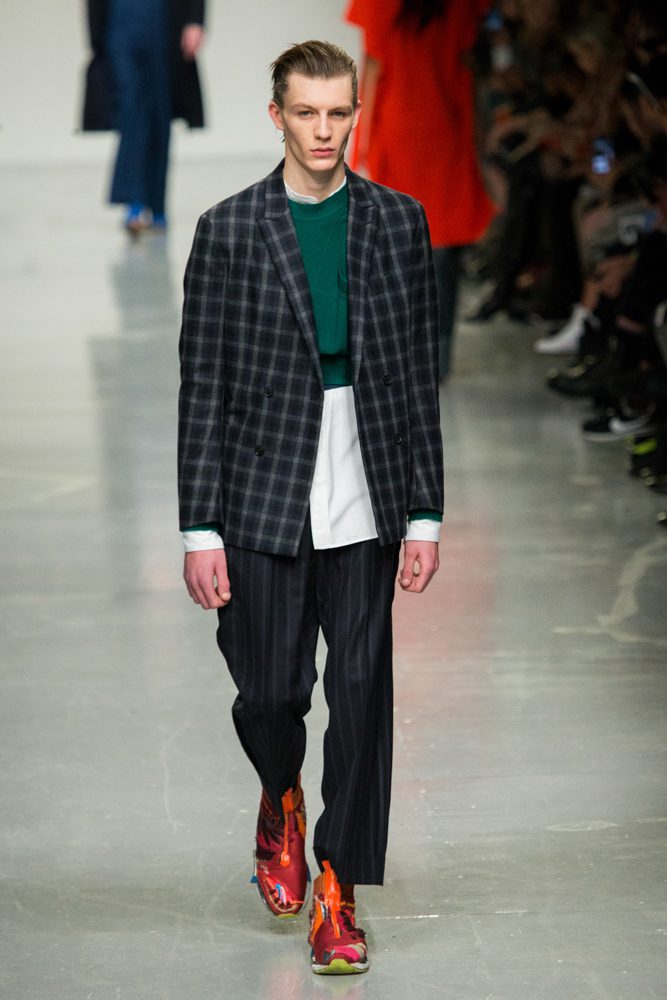
At the heart of Casely-Hayford’s approach was a continuing dialogue with classic British tailoring. Pinstripes, checks and structured jackets remained visible, but they were placed into a much more relaxed environment. Rather than presenting tailoring as rigid or formal, the collection allowed it to interact with sportswear, knitwear and oversized outerwear. The effect was a modern wardrobe that retained the precision of traditional menswear while responding to the way contemporary men actually dress.
Texture and Pattern
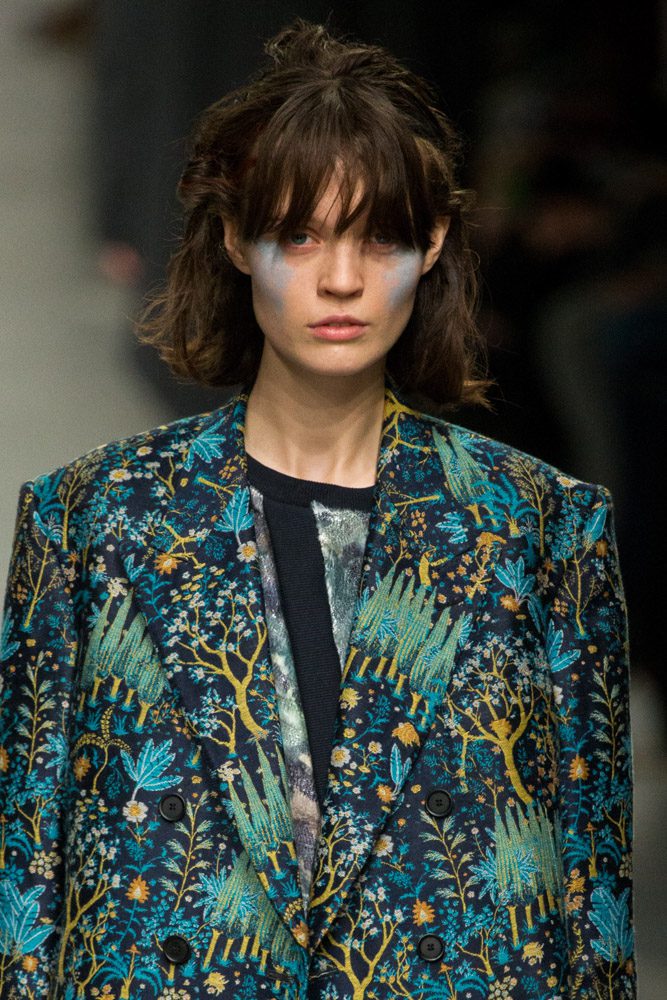
Texture played an important role in giving the silhouettes depth. Tonal fabrics were interrupted by patterned surfaces, while checks and pinstripes were combined with more unusual textures. One of the collection’s more distinctive visual elements was the use of circular motifs, including the textured circular forms seen across outerwear and trousers. These details added graphic interest without overwhelming the underlying tailoring.
A Touch of the Archive
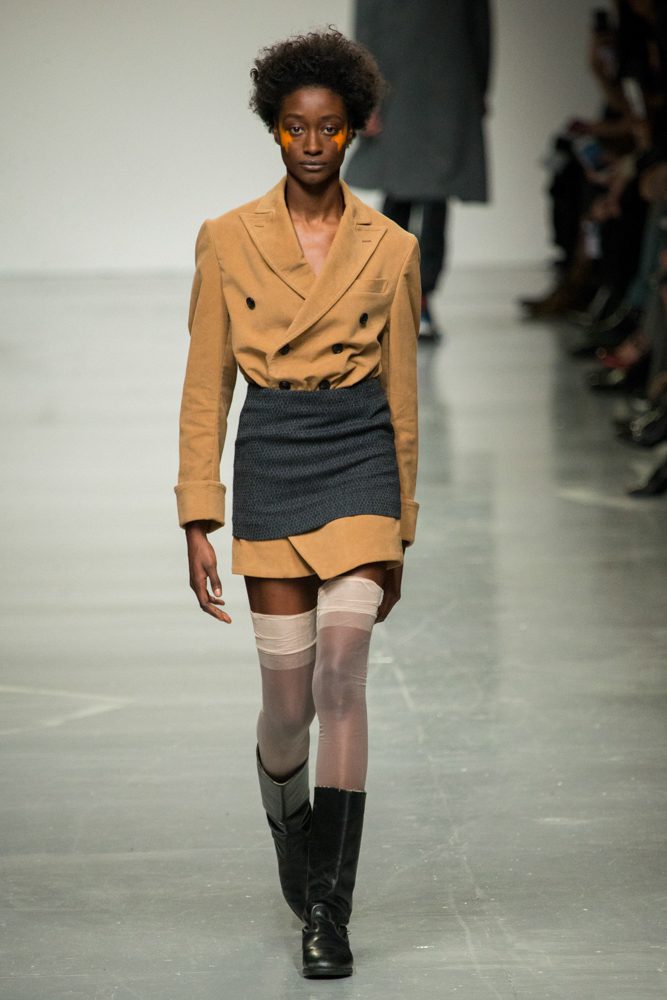
The collection also looked backwards as it moved forwards. 1970s-inspired printed shirts and references to 1980s sportswear were incorporated into the contemporary wardrobe, bringing a sense of British fashion history into the collection. The references were not treated as nostalgia for its own sake. Instead, familiar elements were reshaped through oversized proportions, contemporary styling and the contrast between formal and casual pieces.
Colour with Purpose
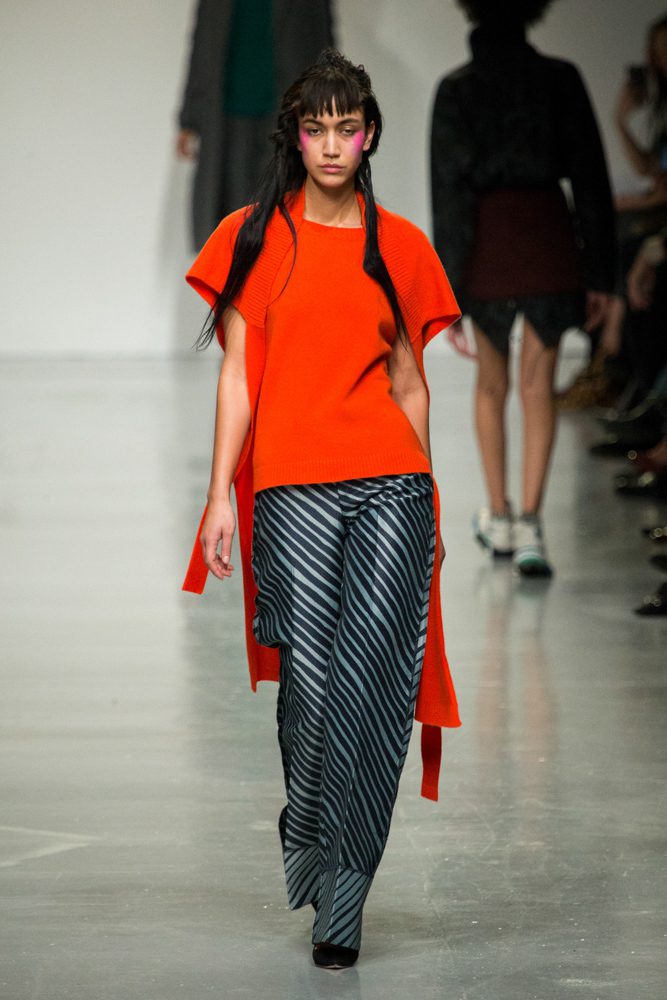
The palette was predominantly restrained, with navy, black, grey and other autumnal tones providing the foundation. Against this quiet base, brighter moments became particularly effective. A striking orange piece introduced a sudden burst of colour, demonstrating how a single vivid element could transform an otherwise muted look. This balance between restraint and impact gave the collection a sophisticated visual identity without relying on excessive colour.
Sportswear Meets Modern Menswear
One of Casely-Hayford’s recurring strengths is the ability to place sportswear and tailoring within the same wardrobe. Here, knitwear, relaxed separates and athletic references sat comfortably beside suits, coats and traditional menswear fabrics. The result was not a simple fusion of the two. Instead, each category altered the character of the other. Sportswear became more refined through tailoring, while tailoring became more relaxed through the influence of sportswear. The collection captured a particular idea of contemporary British dressing: intelligent but relaxed, rooted in tailoring but open to experimentation. Casely-Hayford’s approach has long been concerned with the relationship between classic menswear and modern life, and this collection continued that conversation through proportion, layering and construction. The clothing felt designed for a man who appreciates the discipline of tailoring without wanting to be restricted by it.
CARRO Studio Behind the Lens
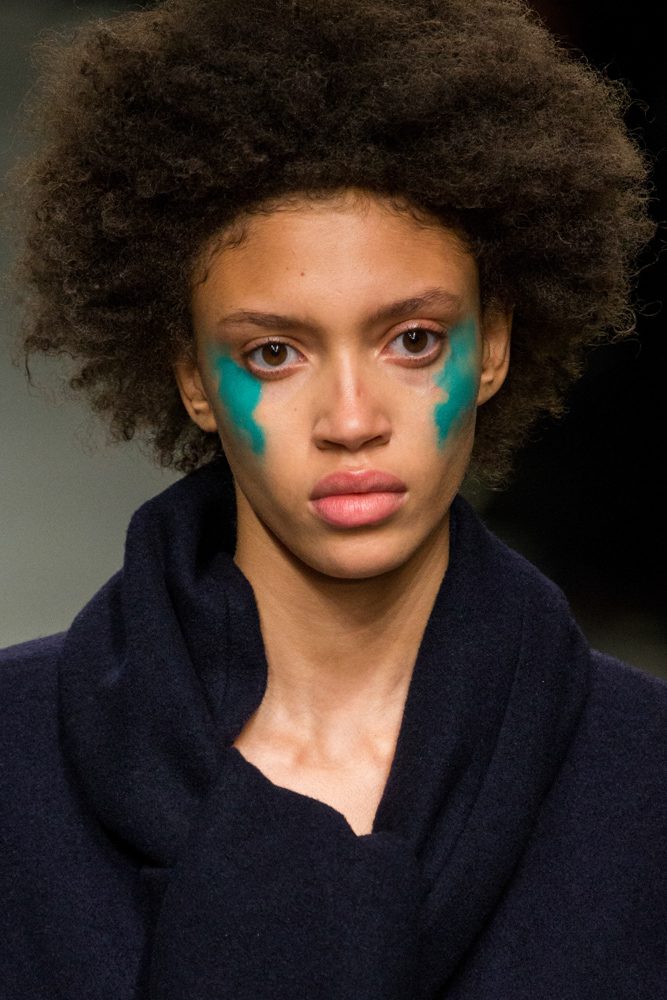
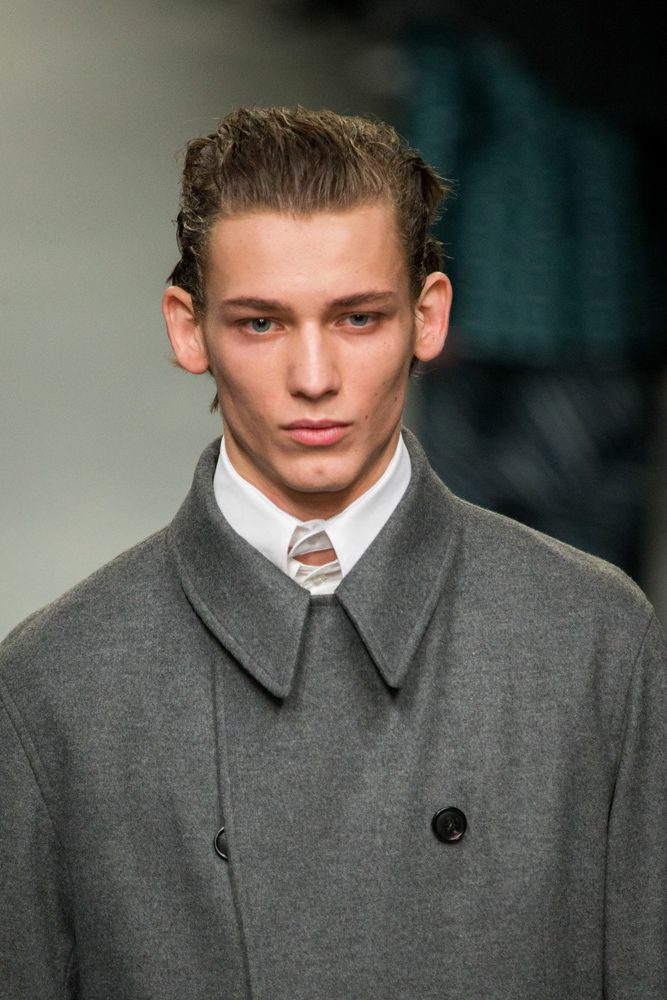
CARRO Studio’s photography captures the collection through its strongest visual qualities: the scale of the outerwear, the changing proportions, the textures of the fabrics and the contrast between formal tailoring and relaxed sportswear. The camera makes the construction of the garments particularly apparent. Wide silhouettes, curved collars, layered coats and patterned surfaces become graphic elements within each frame, while movement reveals how the oversized pieces interact with the body. Casely-Hayford’s collection demonstrated that contemporary menswear does not need to abandon its heritage in order to evolve. Instead, traditional tailoring can be expanded, softened and disrupted through proportion, texture and styling. With oversized outerwear, modernised tailoring, sportswear references and carefully controlled flashes of colour, the collection presented a vision of British menswear that felt both familiar and new. Through CARRO Studio’s photography, those details and silhouettes remain preserved as part of the visual story of Casely-Hayford’s work.
0 Comments