
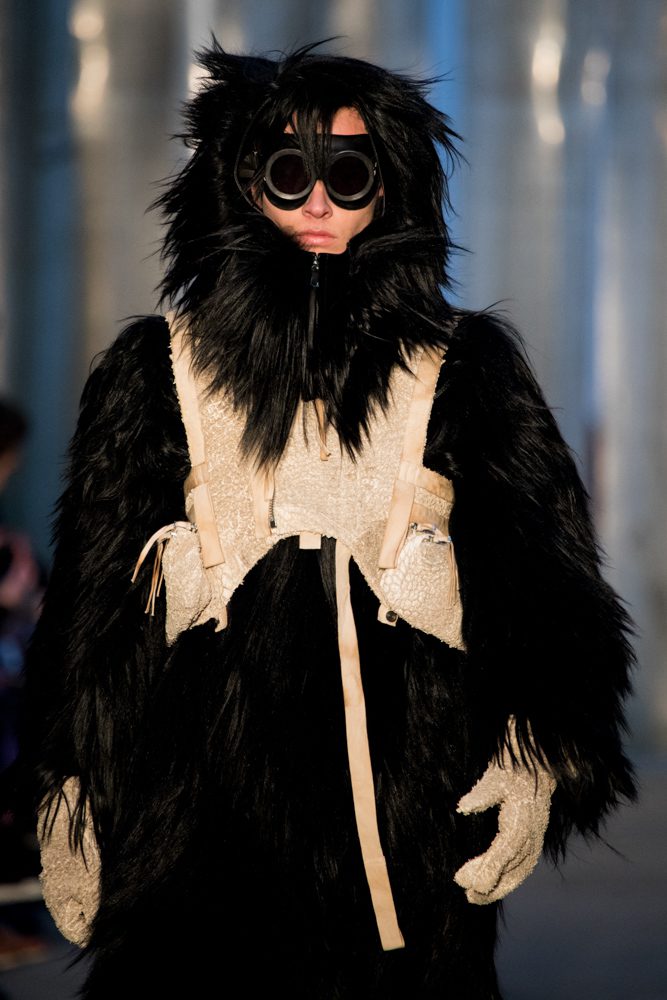
Leather, Texture and Form
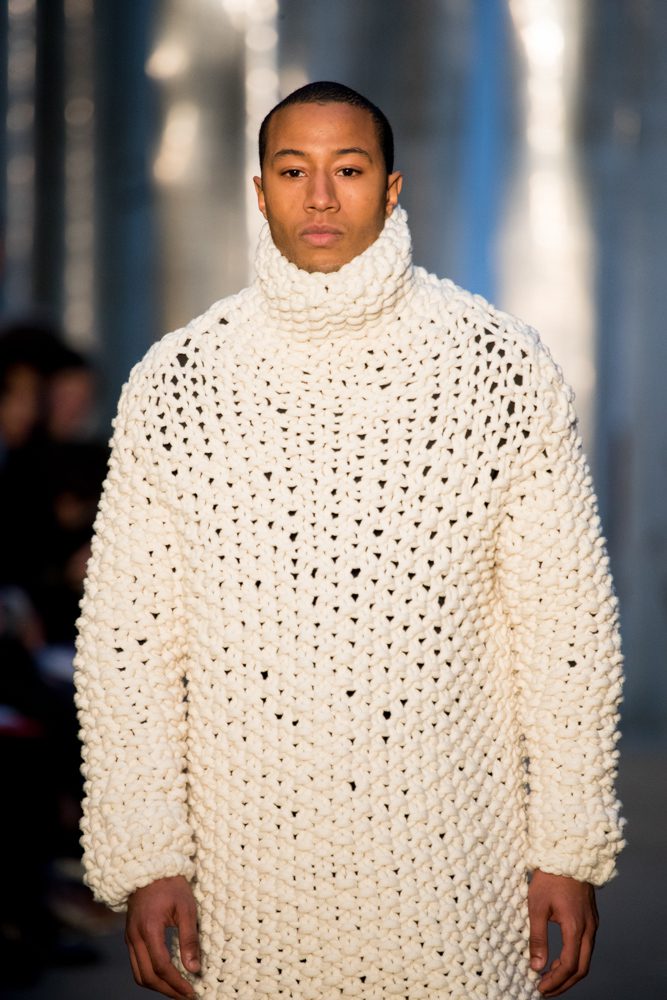
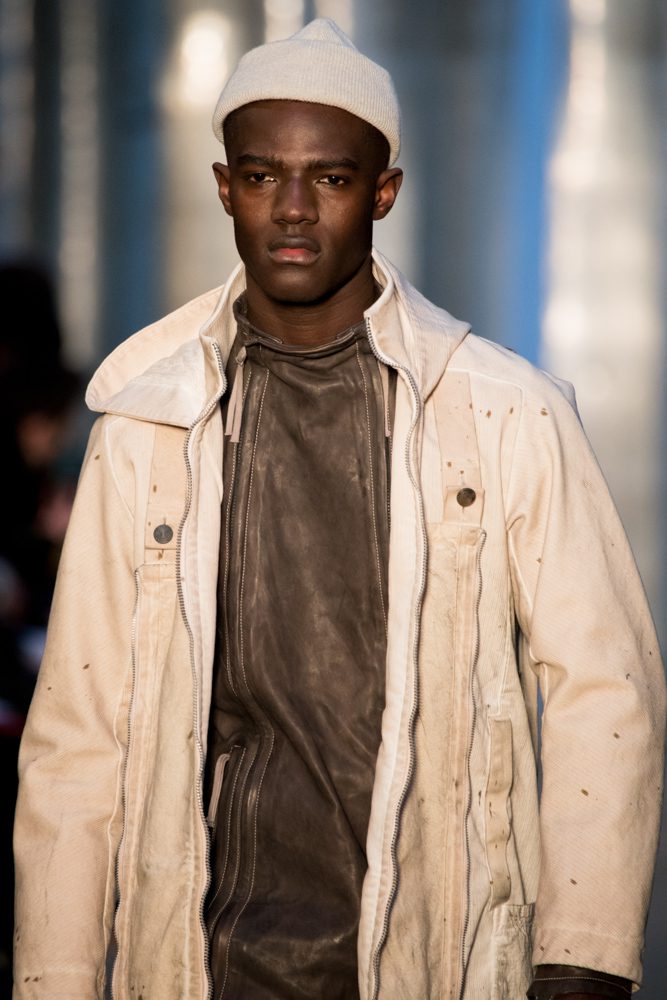
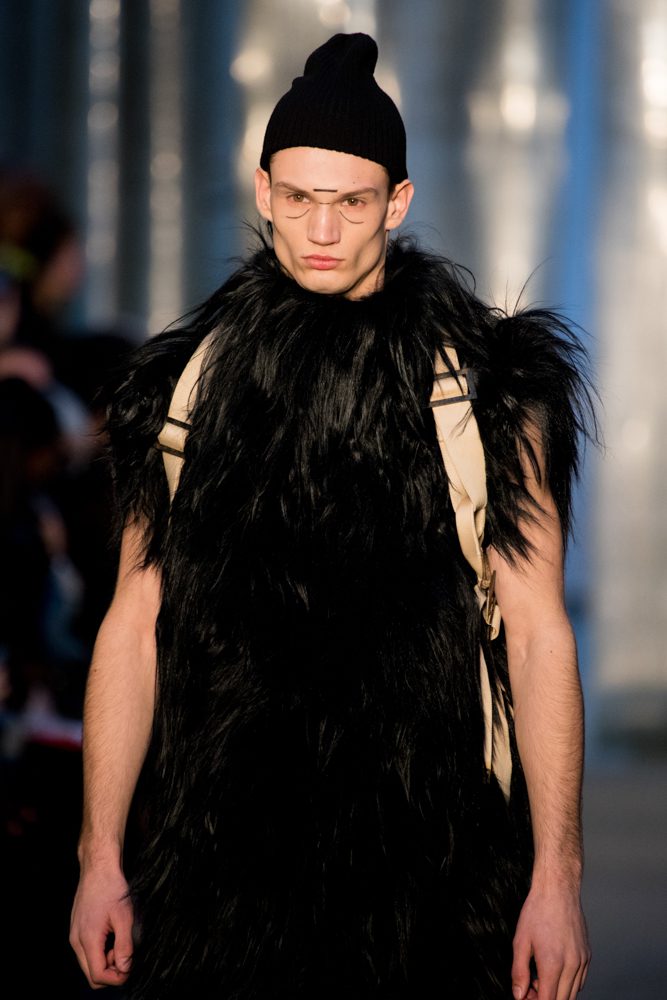
Boris Bidjan Saberi’s menswear occupies a space where tailoring, streetwear and extreme craftsmanship meet. His distinctive approach to clothing is built around texture, proportion and a sense of controlled rawness, creating garments that feel both protective and sculptural. The collection captured by CARRO Studio continued that language through heavy outerwear, rugged textures, leather, technical pieces and deliberately distressed surfaces. The silhouettes were powerful without relying on conventional tailoring, creating a wardrobe that felt closer to armour than traditional menswear. Contemporary coverage highlighted shaggy coats, treated parkas, substantial leather jackets, relaxed trousers and experimental knitwear.
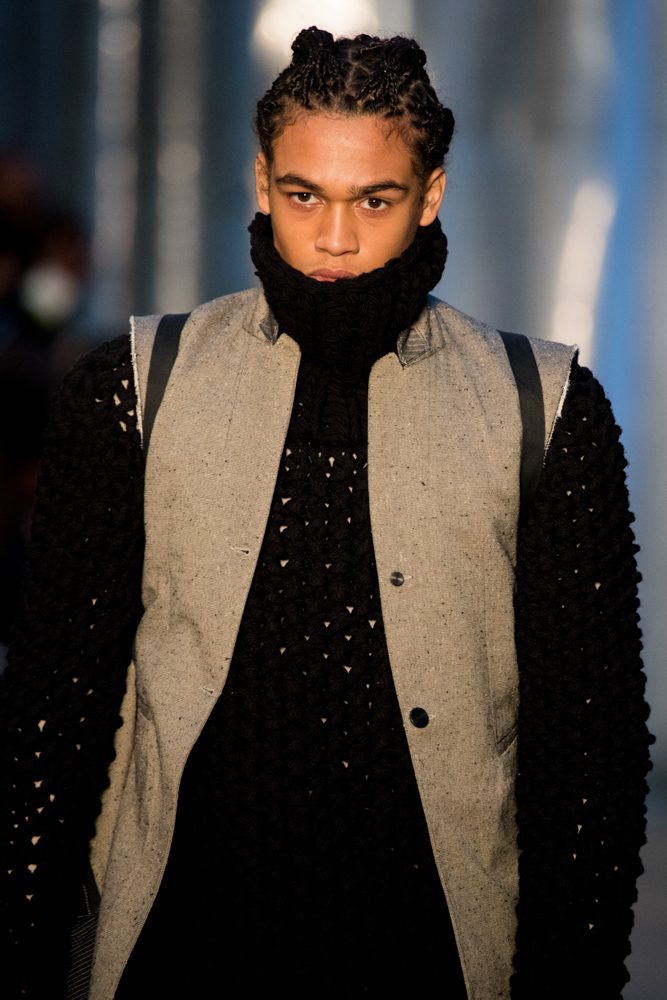
Dark, Raw and Sculptural
Darkness is an important part of Saberi’s visual vocabulary. Black, charcoal, deep grey and earthy tones give the clothes an almost monochromatic intensity, allowing texture and construction to become the principal sources of contrast. Instead of using colour as decoration, the collection creates interest through surfaces: rough wool against leather, distressed fabrics against smoother technical materials, and substantial outerwear against softer layers. The result is clothing with a distinctly physical presence.
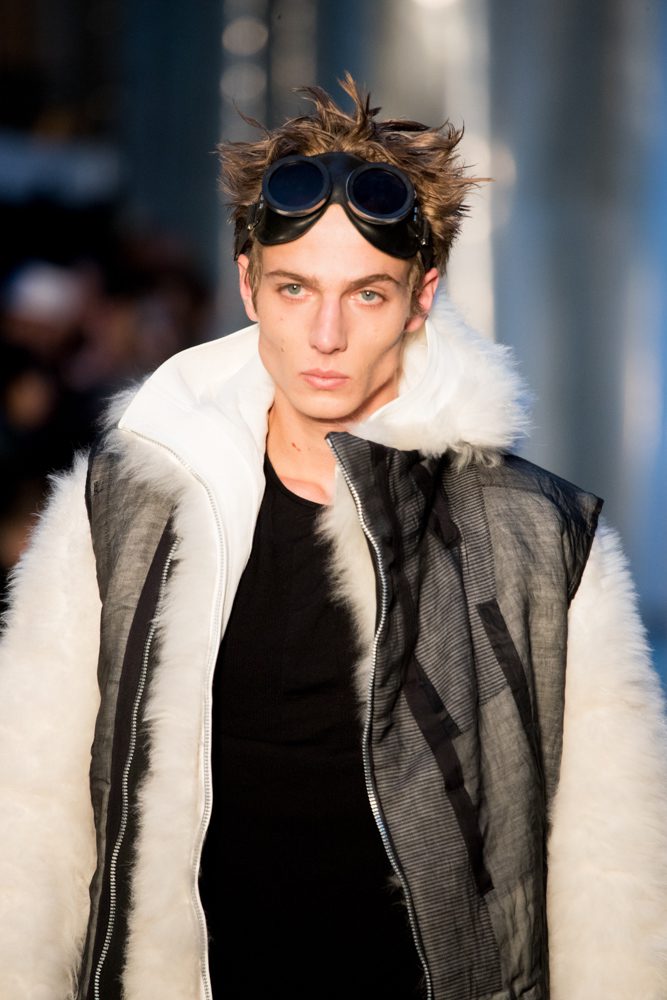
The Power of Outerwear
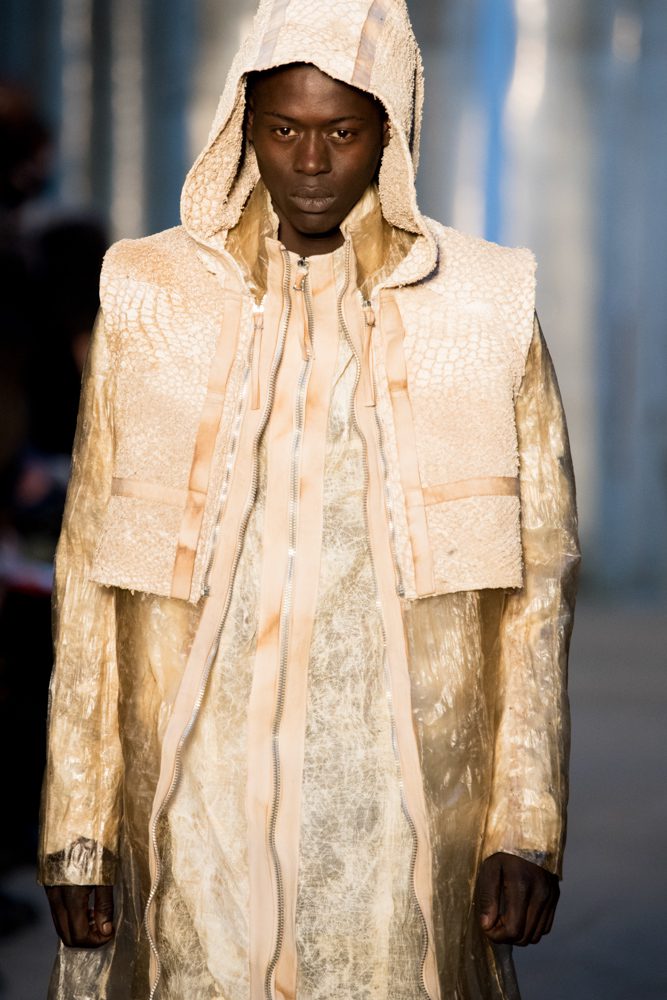
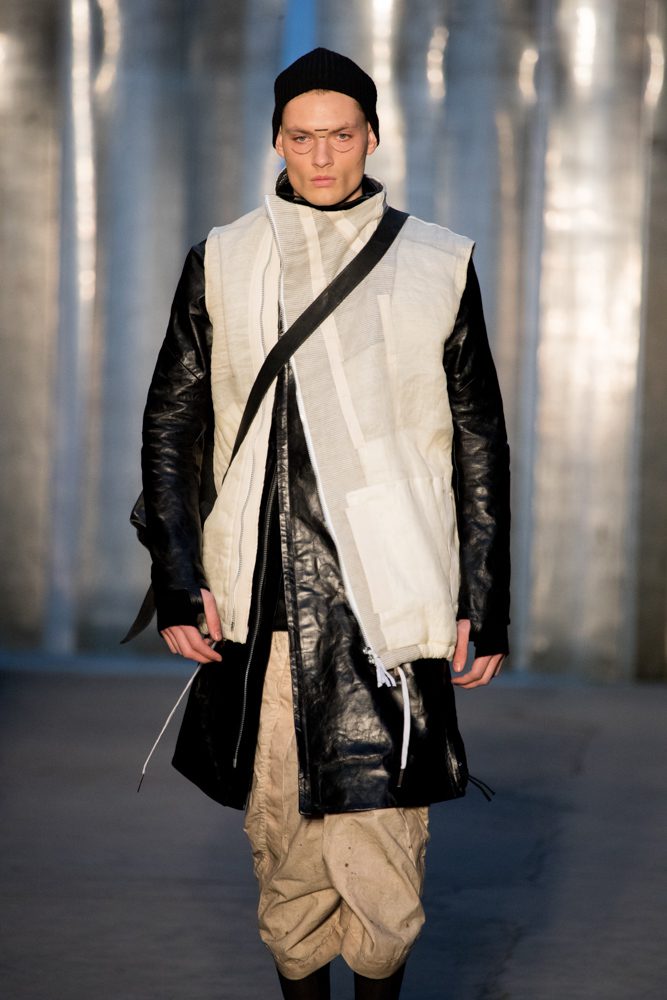
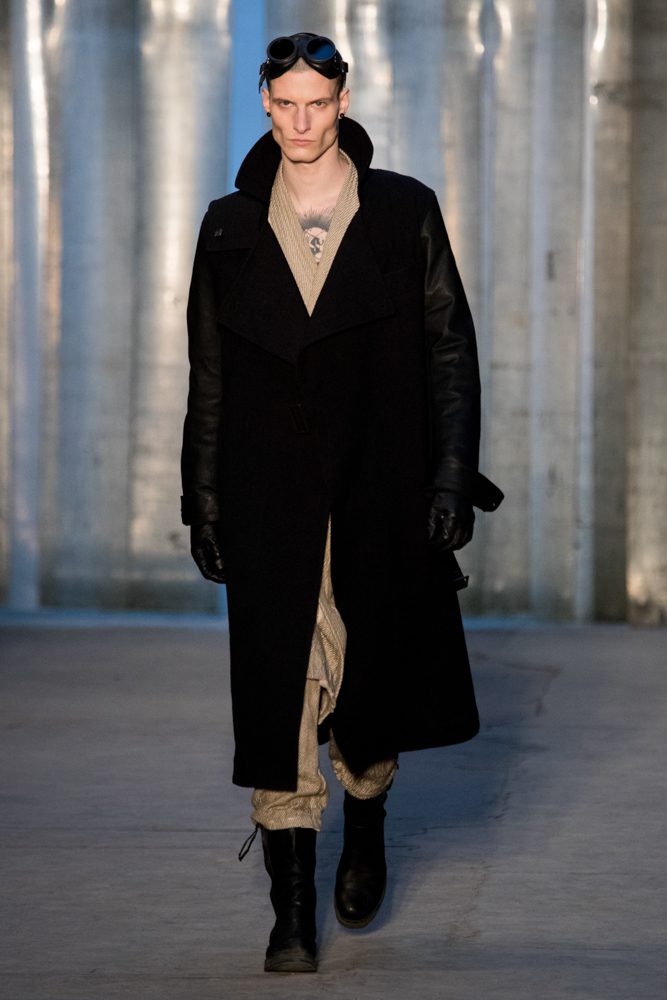
Outerwear is where the collection becomes particularly expressive. Large, shaggy coats create exaggerated volume, while treated parkas and heavy leather jackets add structure and weight. Vogue noted the labour-intensive fabric treatments and the imposing character of the leather jackets, alongside more relaxed pieces such as low-slung trousers and khaki waistcoats. These garments change the proportions of the body, creating broad shoulders, elongated shapes and silhouettes that appear almost architectural as they move down the runway.
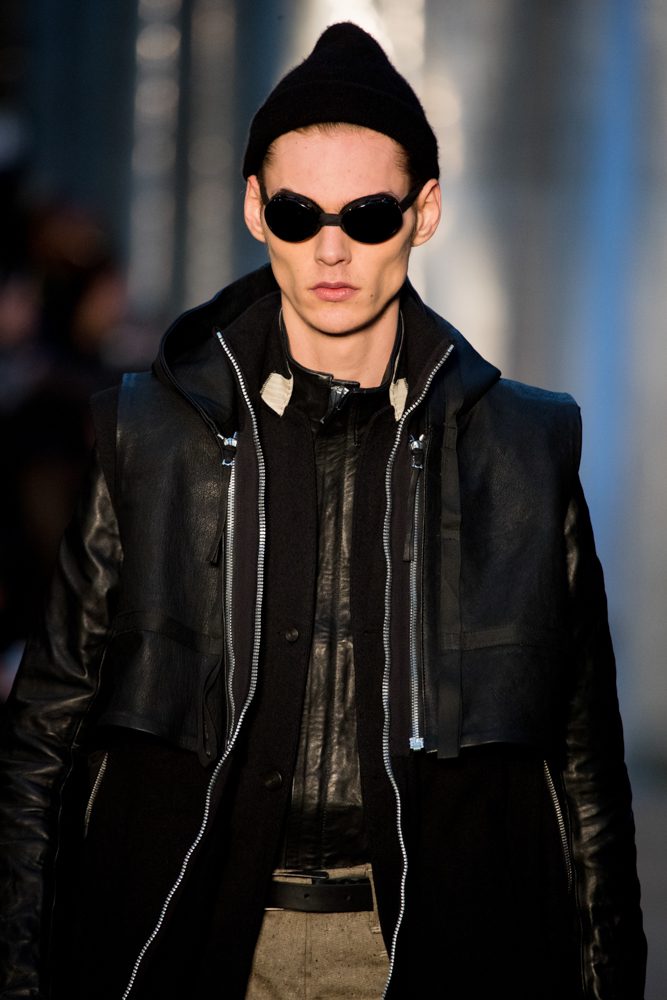
Texture as Design
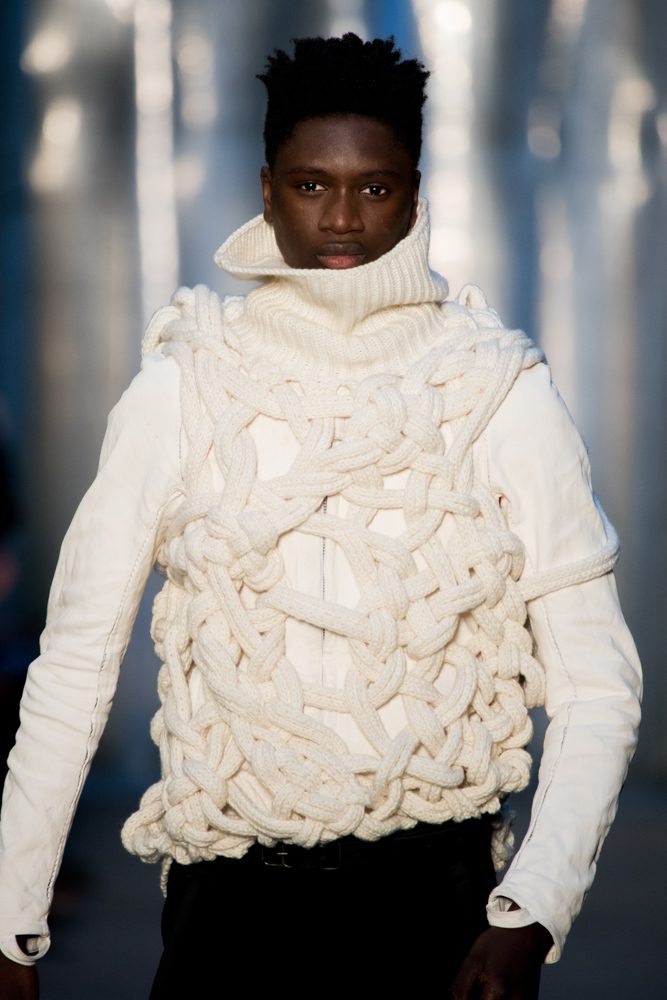
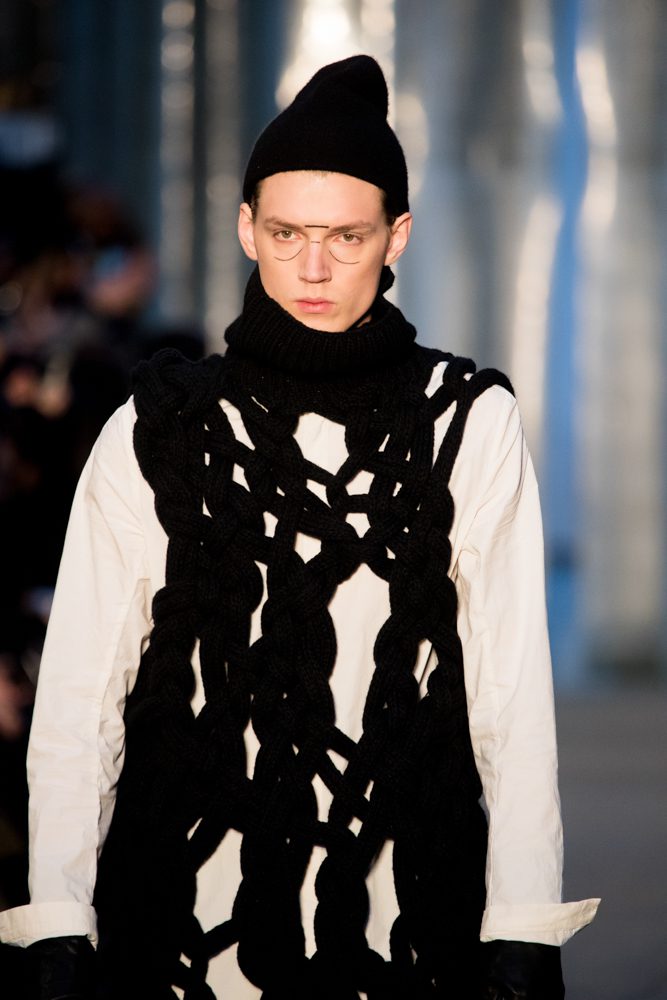
Saberi’s clothing rewards close attention. The collection includes rough, tactile knits, heavy rope-like details, distressed surfaces and weathered finishes. One of the knitwear pieces featured an unusually textured stitch and contrasting heavy rope elements, while the treated outerwear gave the impression of garments that had already experienced a life beyond the runway. That sense of imperfection is part of the aesthetic. Surfaces are not necessarily polished; instead, wear, irregularity and texture become part of the design.
Leather, Harness and Utility
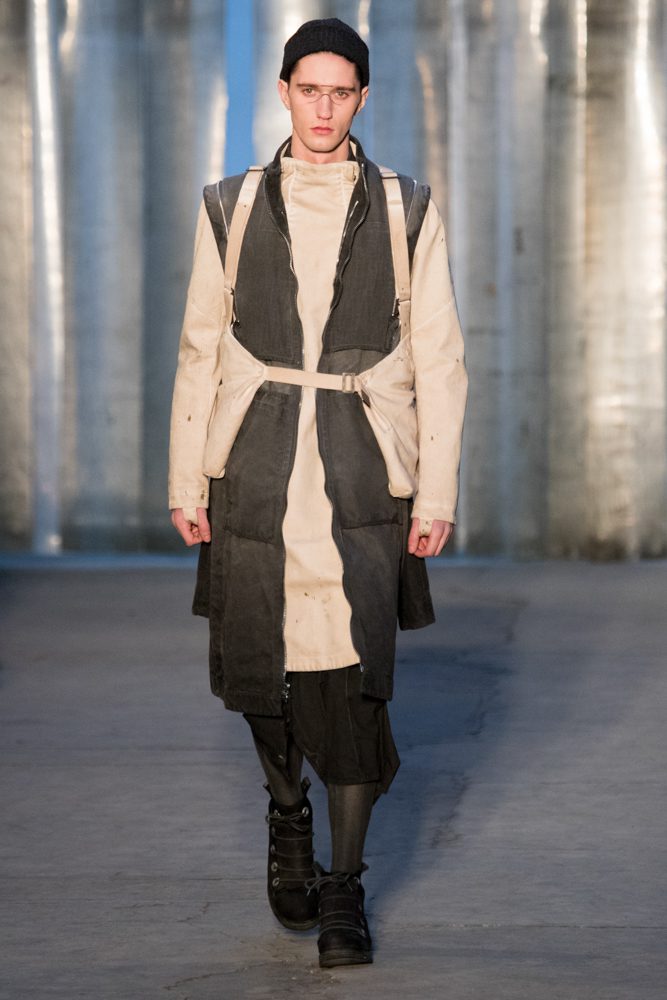
Leather remains an important component of Saberi’s vocabulary, giving jackets and accessories a tough, almost protective quality. Harness-inspired elements introduce another layer of structure, wrapping around the body and creating lines that contrast with the looser garments. The effect is both functional and expressive, clothing that appears designed to protect, contain and transform the silhouette. The collection’s collaboration with Salomon also brought an outdoor and mountaineering reference into the footwear, with aggressive hiking-inspired boots echoing the equipment used for ice climbing.
The Influence
The outdoor reference is more than a footwear detail. The collection suggested an austere, expeditionary character through substantial coats, rugged textures and protective layers. Vogue described mountaineering as an important reference point, particularly through the climbing-inspired footwear. This gives the clothing a sense of resilience. The garments appear made for harsh environments, yet their exaggerated proportions and careful construction place them firmly within avant-garde fashion.
Proportion and Movement
Saberi’s silhouettes are rarely static. Wide trousers sit beneath substantial jackets, long layers fall around the body and oversized coats create movement with every step. The contrast between volume and more closely fitted elements is particularly effective on the catwalk. A large outer layer can be balanced by a narrower trouser or fitted leather piece, creating a constantly shifting relationship between body and garment. This manipulation of proportion is central to the collection’s visual identity.
CARRO Studio Behind the Lens
CARRO Studio’s high-resolution catwalk photography captures these qualities with particular clarity. The images reveal the weight of the outerwear, the surface of the leather, the irregularity of the knits and the relationship between the garments and the body. On the runway, movement becomes part of the design, allowing oversized coats, long layers and wide trousers to create constantly changing silhouettes. The camera also brings attention to the smaller elements: footwear, fastenings, harness details, pockets and surface treatments that contribute to Saberi’s distinctive aesthetic.
Fashion as Armour
There is an almost protective quality to Boris Bidjan Saberi’s menswear. Coats become shields, leather becomes armour and layers create a physical boundary around the wearer. Yet beneath that toughness is an extremely considered approach to construction and proportion. The clothes are not simply rugged; they are carefully manipulated to create a particular visual relationship between fabric, body and movement. Through CARRO Studio’s lens, that tension becomes especially clear: raw yet refined, functional yet experimental, and dark yet intensely detailed.
0 Comments