
Futuristic Menswear
Julius brought its distinctive vision of dark, experimental menswear to Paris, presenting a collection where futuristic sportswear, punk references and industrial detailing collided. Under creative director Tatsuro Horikawa, the label explored a world of contrasts: purity and destruction, soft volume and hard construction, monochrome minimalism and flashes of vivid colour. The collection was presented under the title “Neu Romantika,” drawing on science fiction and dystopian imagery while continuing Julius’s fascination with transformation and duality.
White as a Starting Point
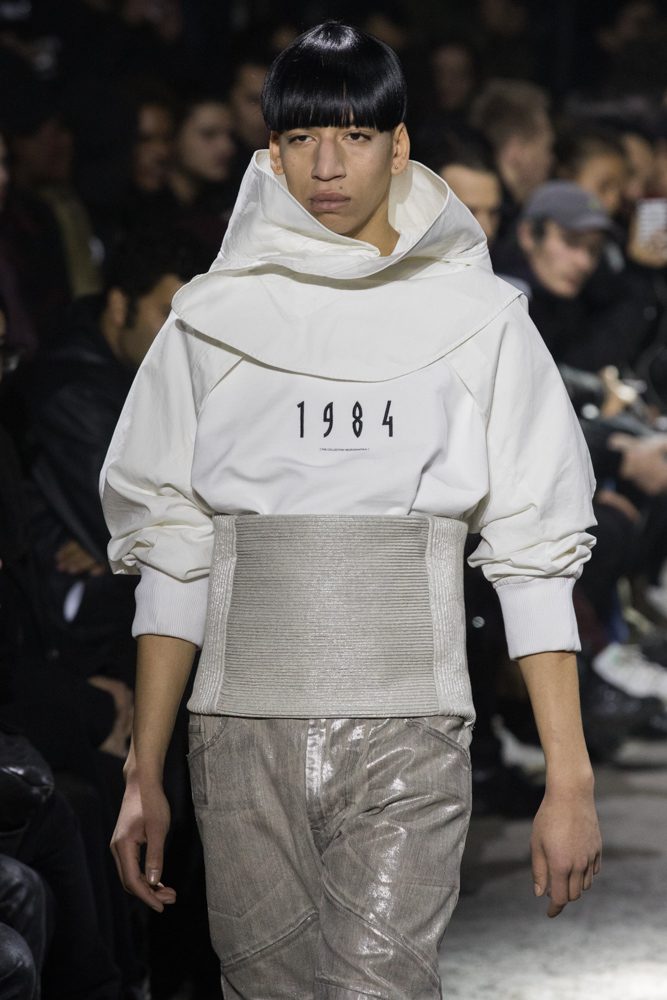
The collection opened with a striking sequence of predominantly white silhouettes. Voluminous jackets, structured collars and oversized proportions created an almost futuristic uniform, giving the opening looks a sense of protective clothing or advanced sportswear. Silver denim and metallic surfaces intensified that futuristic quality, while reconstructed garments introduced irregularity into otherwise controlled silhouettes. Jackets appeared altered and displaced, with unusual pocket placement and additional sleeves contributing to the collection’s experimental character.
From Monochrome to Colour
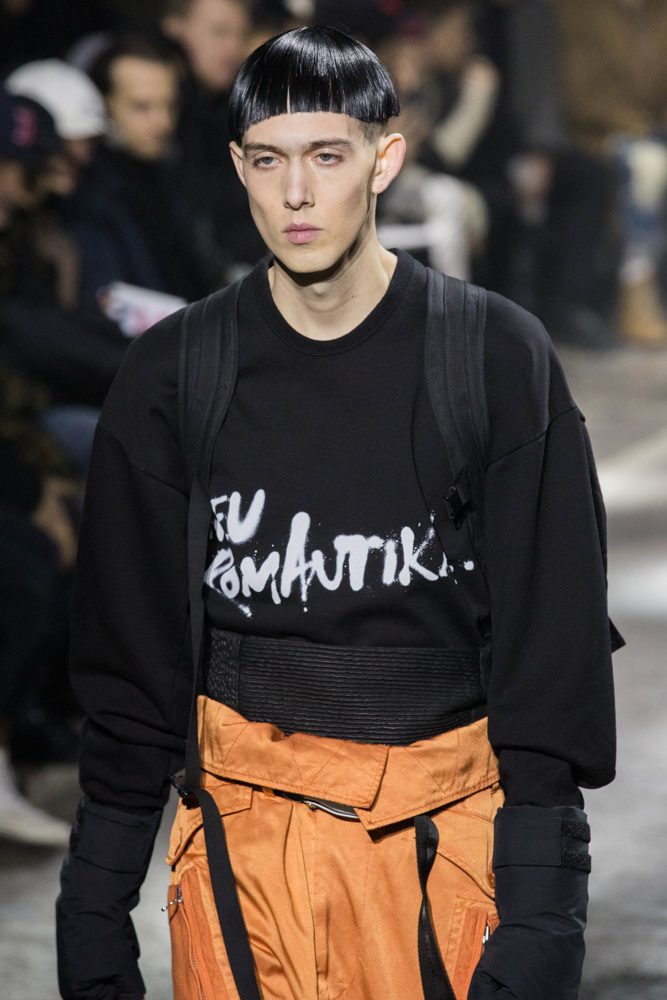
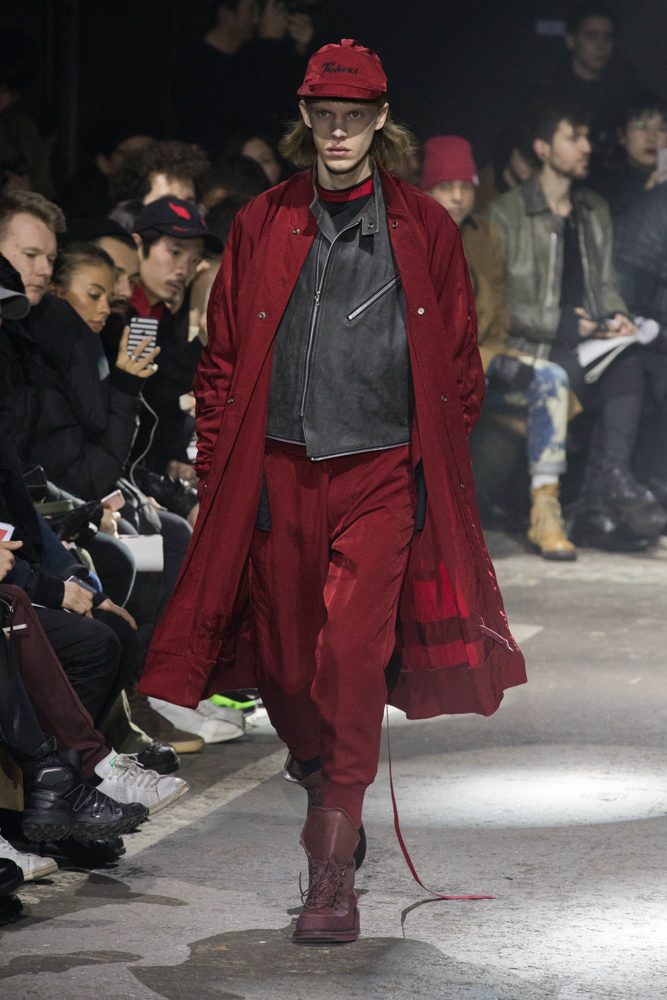
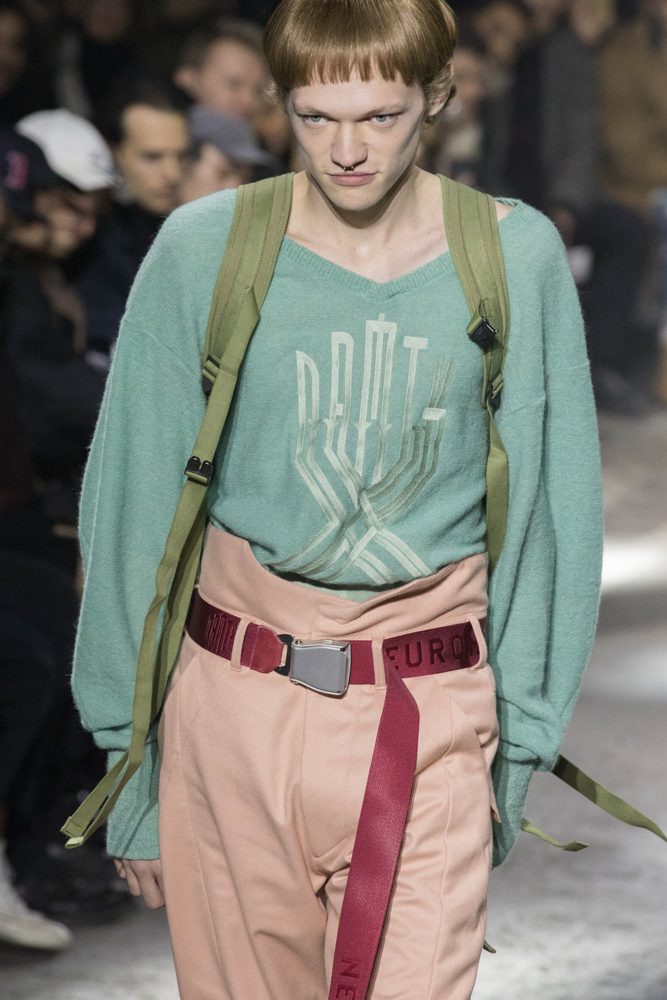
As the collection progressed, the stark white beginning gave way to deeper blacks punctuated by red and orange. These stronger colours brought energy to the otherwise restrained palette, appearing across outerwear, knitwear, bombers and sports-inspired pieces. Subtle shades of peach, olive, violet and seafoam also appeared, creating a more unusual colour story than the traditional black-and-grey vocabulary often associated with Julius.
Futuristic Utility
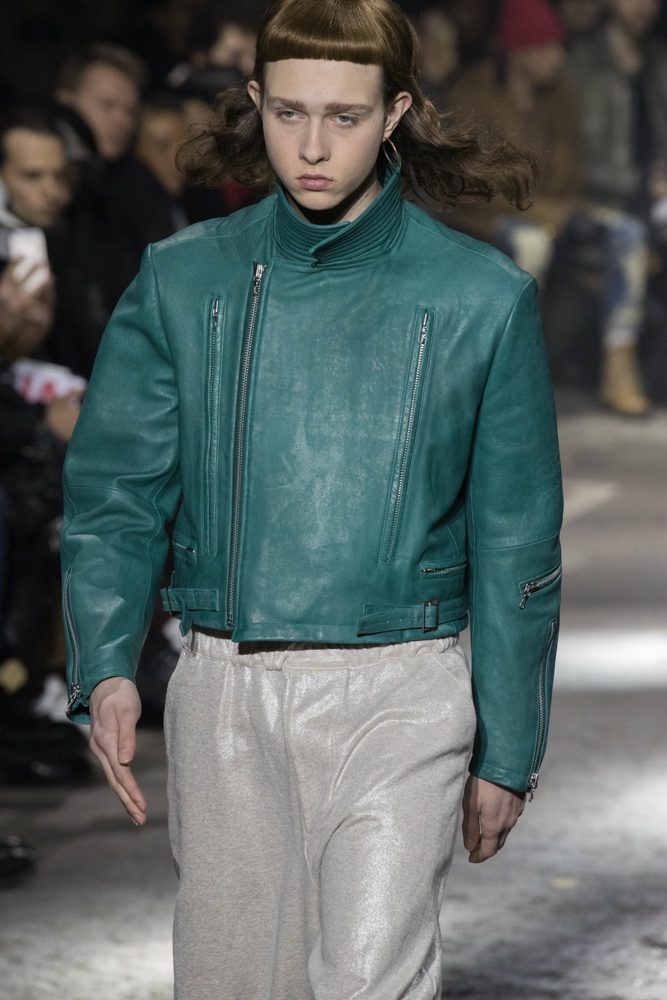
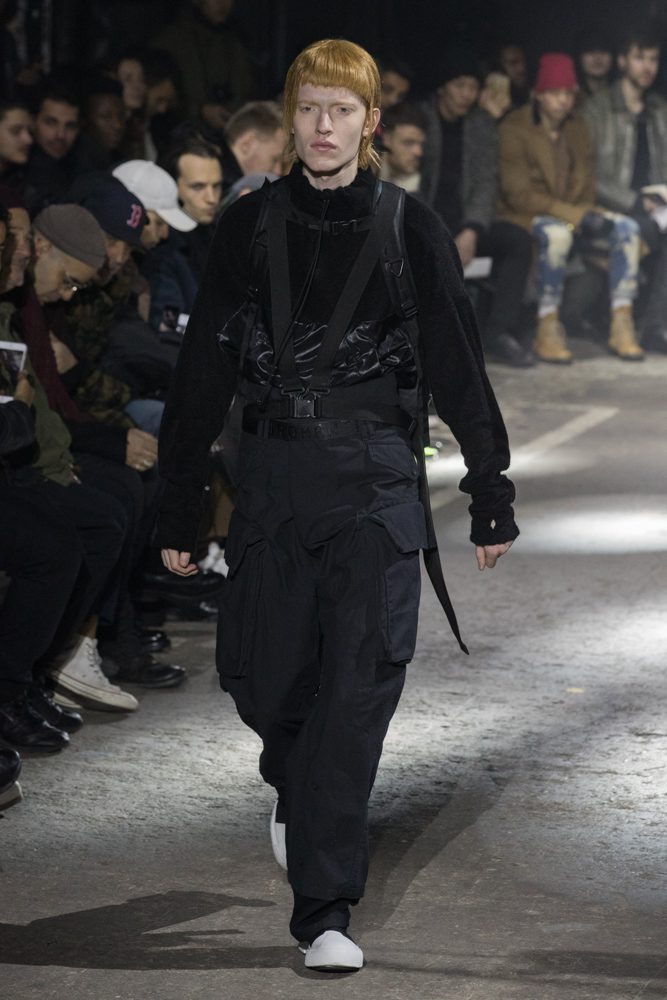
Utility was central to the collection. Zips, straps, pockets, patches and harness-like details gave the clothing a functional character, while biker jackets, bombers and parkas grounded the more futuristic ideas in recognisable menswear. There was a strong sense of clothing being engineered rather than simply decorated. Details seemed designed to alter proportion, interrupt the silhouette or create movement around the body.
The New Silhouette
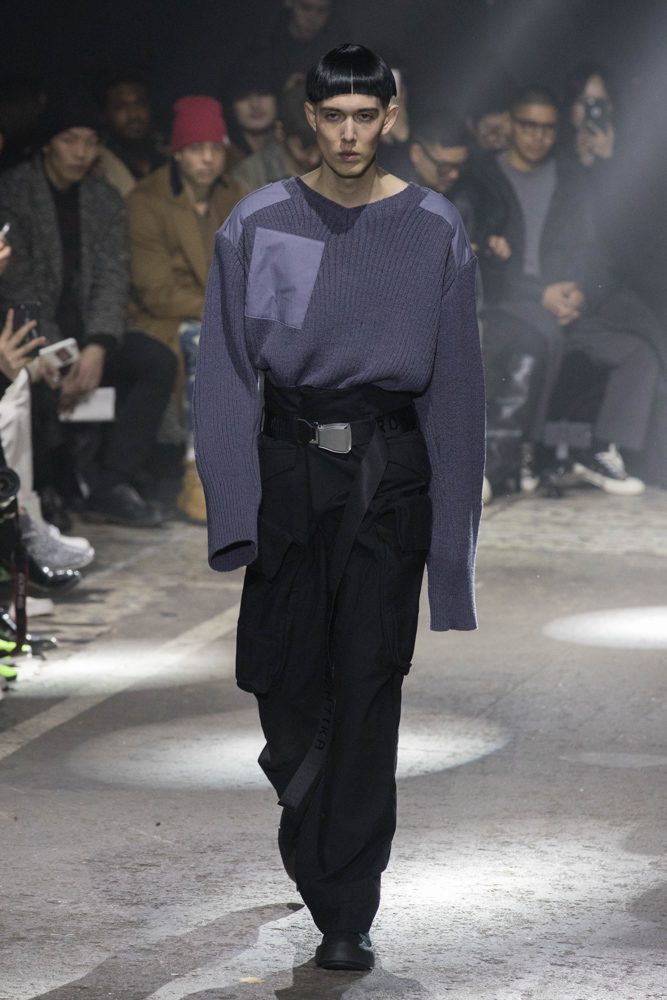
Julius has always worked with proportion, and here volume became one of the defining elements. Cropped and oversized pieces were layered together, while wide trousers, hakama-inspired shapes and elongated garments created silhouettes that moved away from conventional menswear. The result was a wardrobe that felt both protective and expressive. Clothing wrapped around the body, extended beyond it and occasionally appeared deliberately displaced, creating a relationship between garment and movement that became particularly striking on the catwalk.
Punk, Science Fiction and the City
Although the collection looked towards the future, its vocabulary remained connected to punk and underground culture. Leather biker jackets, distressed denim, heavy footwear and layered sportswear brought an urban edge, while references to science fiction and dystopian cinema pushed the clothing into a more imagined world. The collection’s references to Neuromancer, 1984 and Akira helped frame this futuristic atmosphere, but the clothing remained tactile and wearable rather than becoming costume.
Texture, Construction and Movement
Julius’s strength lies in making texture and construction part of the visual language. Smooth technical surfaces could sit beside distressed denim, leather, knitwear and heavier fabrics, creating contrast without relying on excessive decoration. For photography, these contrasts are particularly important. The folds of oversized fabric, the tension of straps and zips, the movement of extended sleeves and the changing relationship between layers become part of the image itself.
CARRO Studio Behind the Lens
CARRO Studio’s catwalk photography captures Julius through this language of contrast. The photographs preserve the scale of the silhouettes, the movement of the garments and the small construction details that give each look its identity. From the stark opening looks to the darker, more aggressive combinations that follow, the camera records a collection built around transformation. Clothing becomes architecture, utility becomes styling and movement becomes part of the design.
Fashion Looking Forward
Julius presented menswear as something evolving rather than fixed. Its futuristic references, punk influences and utilitarian construction were brought together through exaggerated proportion and carefully controlled colour. The result is a collection where the clothes appear to exist somewhere between the familiar and the imagined, a vision of menswear shaped by technology, underground culture and the continuing fascination with what fashion might become.
0 Comments