
A Fashion Daydream
Minki Cheng presented a playful and imaginative vision of womenswear, continuing the character of the Minki woman as independent, energetic and slightly unpredictable. The collection explored the fantasy of going “wild”, using the visual language of fishing as a starting point for colour, texture, movement and unexpected detail. Contemporary reports described the designer’s inspiration as brightly coloured fishing line, fishing lures and the imagined experience of a woman discovering a more adventurous side of herself.
A Girl with an Edge
The Minki woman has always occupied an interesting space between femininity and something more rebellious. Cheng described her as versatile, independent and connected to the city, with an appreciation for both edgy creativity and beauty. That duality continued through the collection. The clothes could appear playful and youthful, but there was also something slightly dangerous beneath the surface, an idea reinforced by the use of fishing lures, objects designed to attract while concealing their purpose.
Colour as a Hook
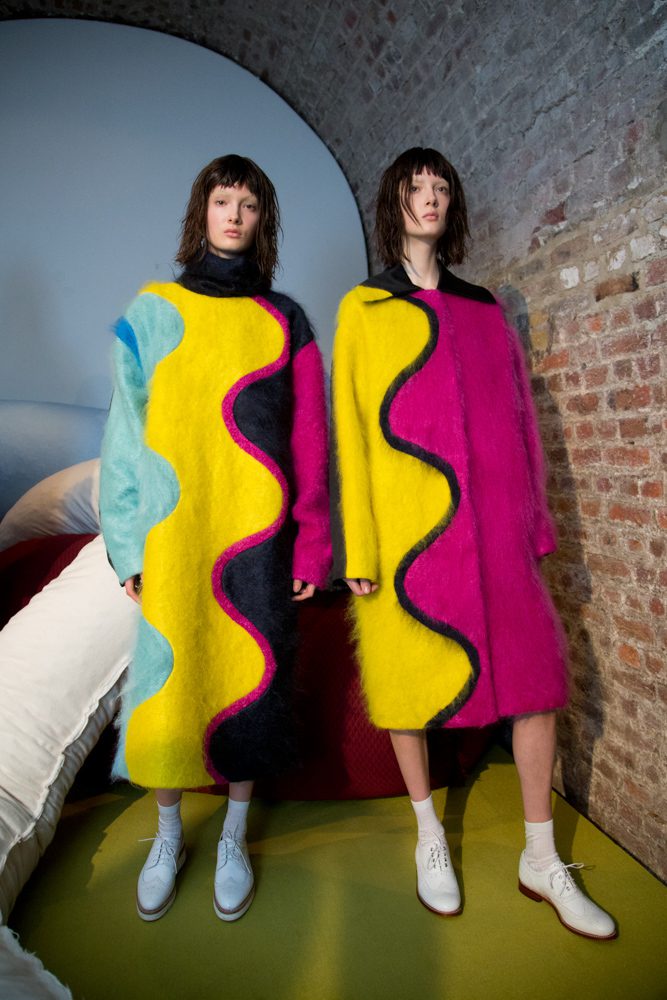
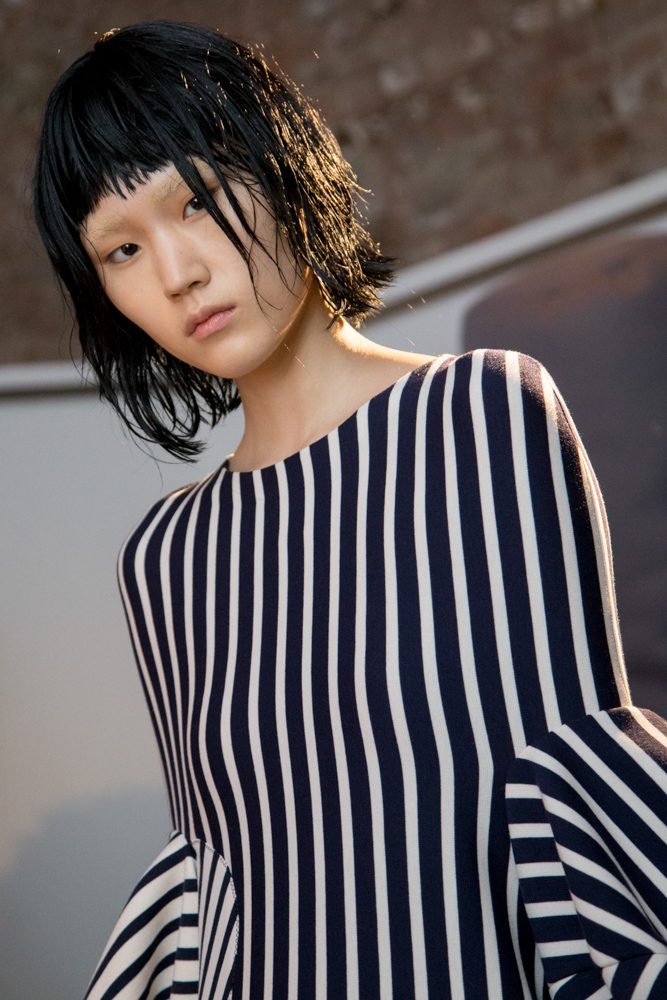
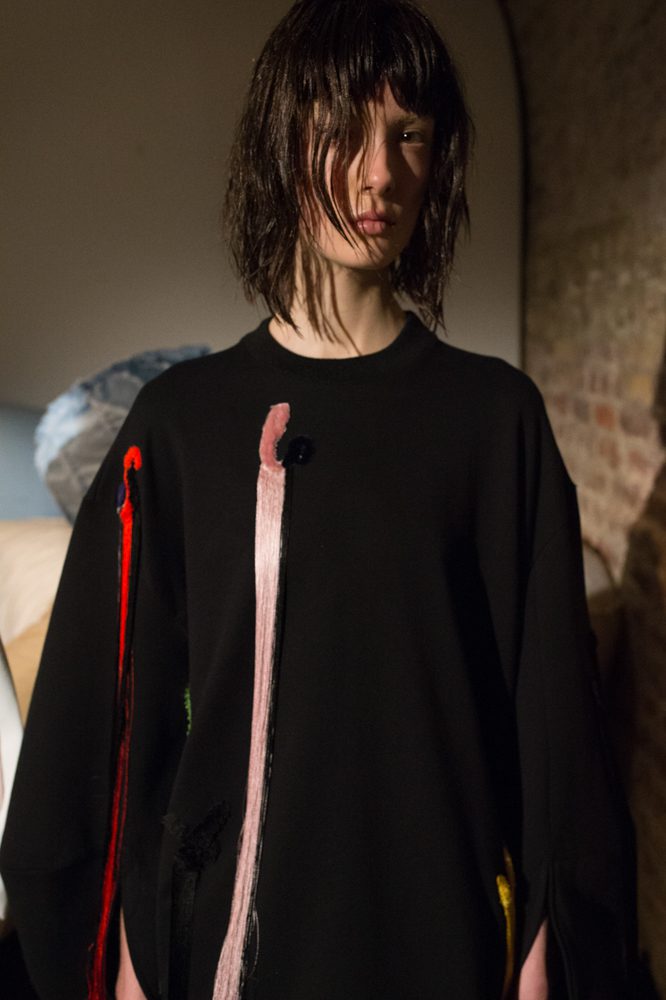
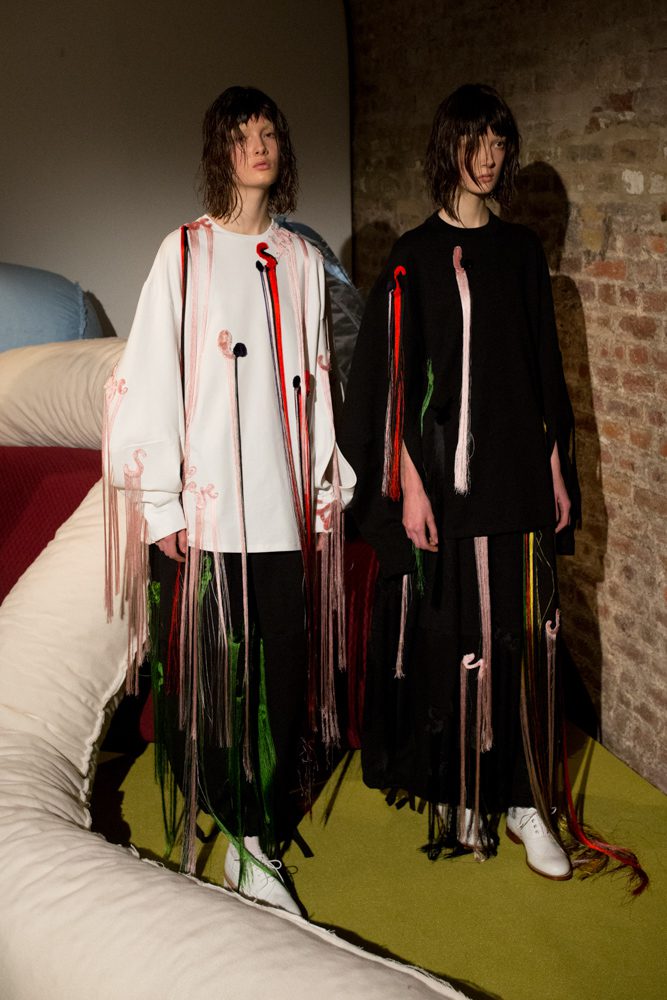
Colour became one of the most expressive elements of the collection. Bright fishing lines were transformed into decorative details, introducing vivid strands of colour against broader areas of white, black and grey. The effect was graphic without feeling overly rigid. Colour appeared almost as something caught or tangled into the garments, giving otherwise simple silhouettes an energetic, handmade quality.
Lines, Fringes and Movement
One of the most distinctive details was the use of coloured lines and hanging elements. According to contemporary coverage, strands extended from oversized sweatshirts and a cocoon-shaped white dress, while fringed lettering such as “Sup” and “Love” moved with the models. These details gave the clothes a kinetic quality. The garments were not simply constructed forms; they changed as the wearer walked, allowing the decorative elements to swing, trail and react to movement.
The Cocoon Silhouette
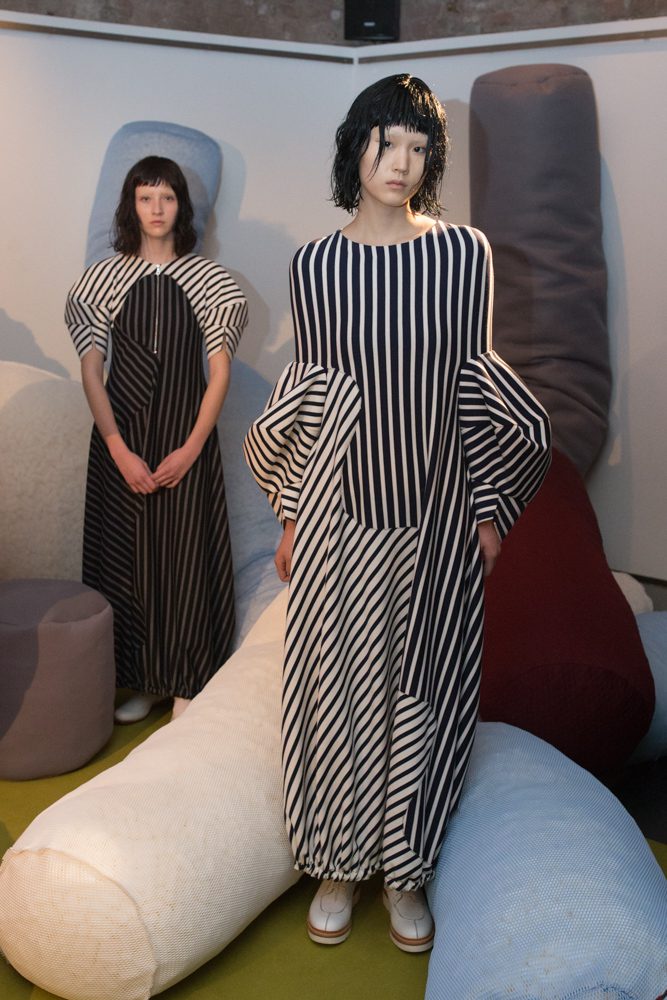
Volume was another important part of the collection. The cocoon-shaped white dress created a soft, rounded silhouette, providing a clean canvas for the more colourful linear details. Oversized sweatshirts similarly emphasised comfort and proportion. Against these larger shapes, the finer strands of colour became even more noticeable, creating a contrast between substantial fabric and delicate, almost thread-like decoration.
Pattern with a Sense of Play
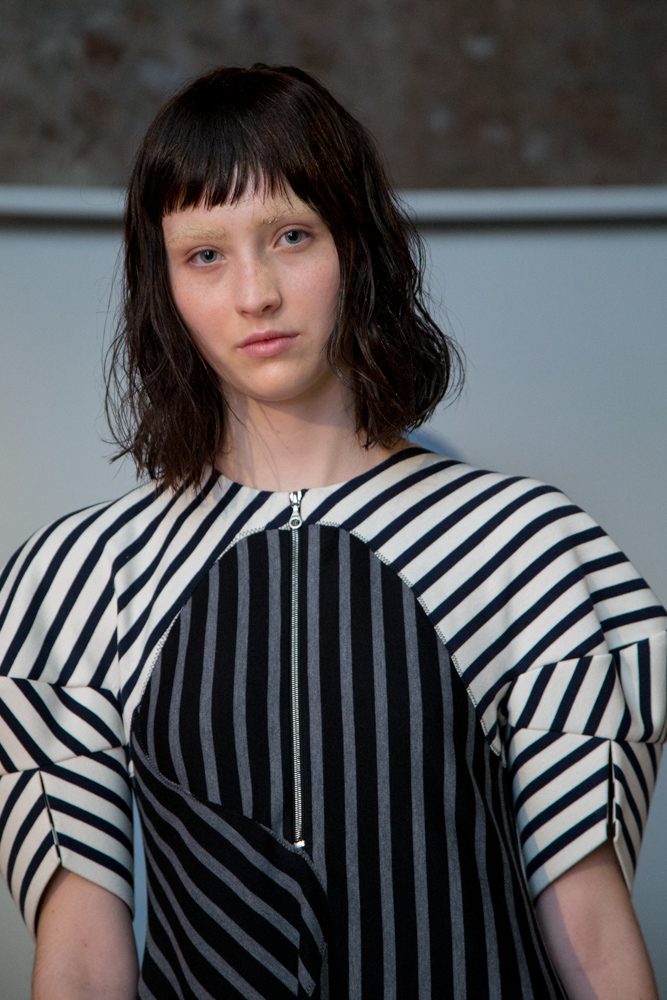
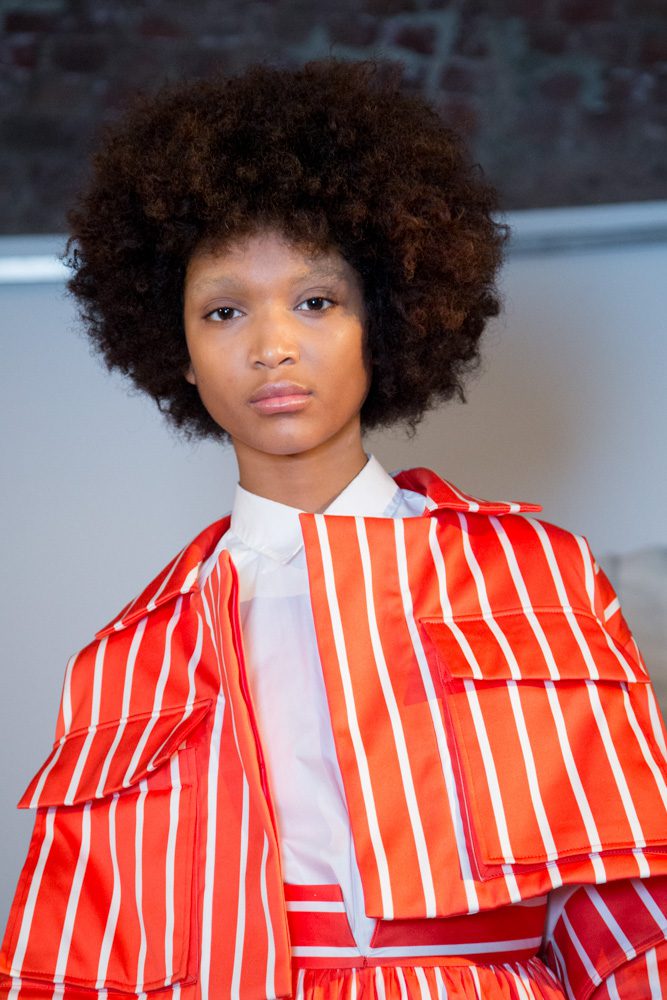
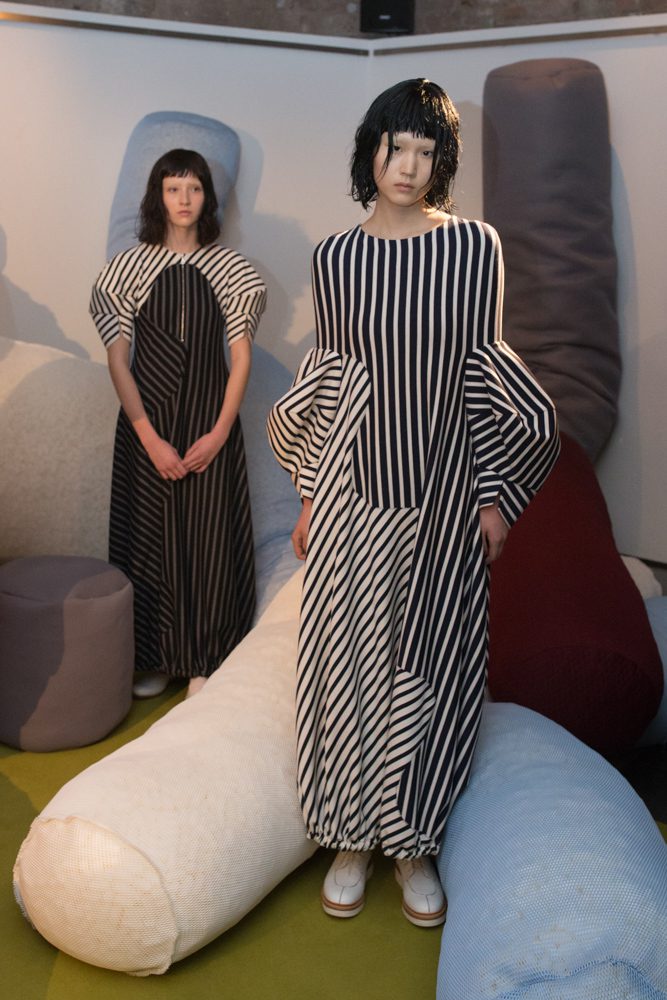
Fishing lures were translated into prints, adding another layer to the collection’s central idea. The motif was both literal and metaphorical: attractive objects that conceal an element of danger. Other looks introduced black-and-grey checks and red-and-white stripes, giving the collection a broader visual vocabulary. These patterns brought a more familiar fashion language into a concept that could otherwise have become purely whimsical.
Texture and Experimentation
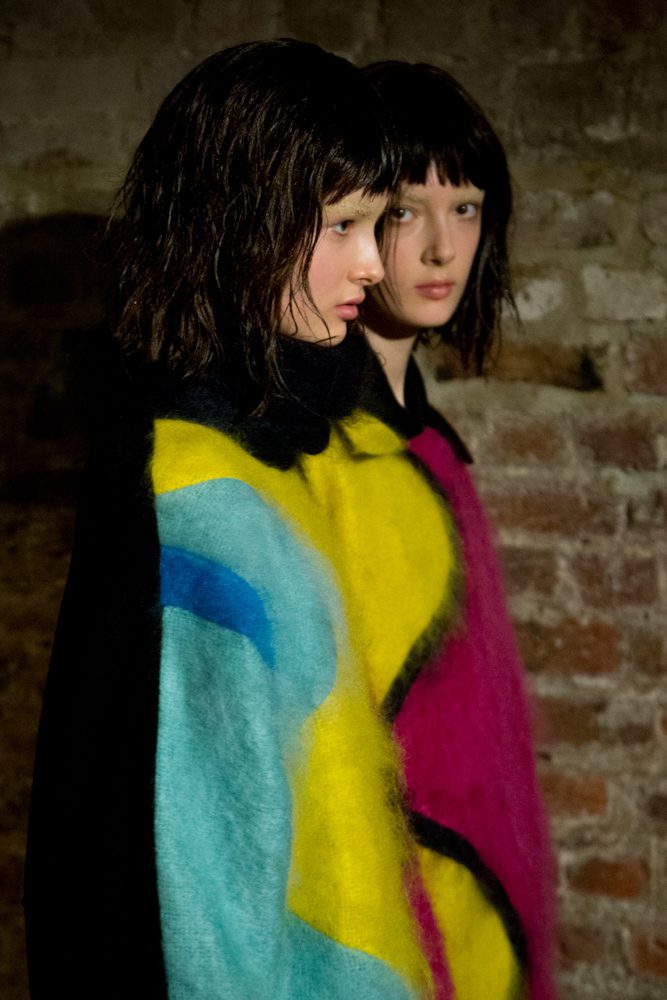
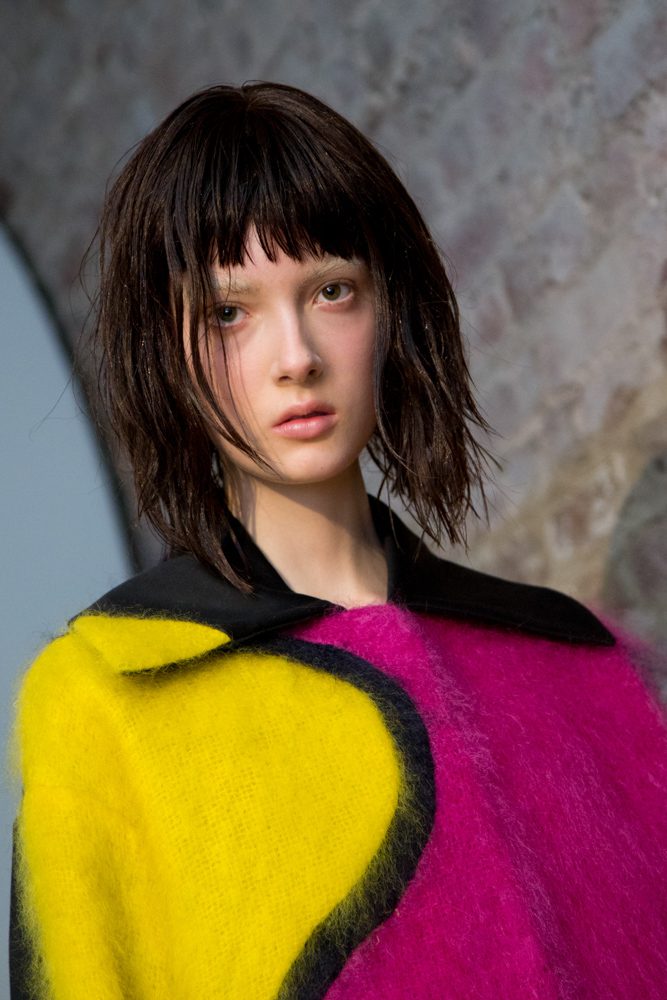
Experimentation with fabric and surface has long been central to Cheng’s work. Earlier collections explored metallic textures, appliqué, fraying, frills, pleating and unusual combinations of materials, while his wider design practice has been associated with imaginative fabric development and unconventional construction. Here, the tactile quality was particularly important. Lines, fringes, prints and contrasting surfaces gave the garments depth, making the clothes interesting not only as silhouettes but also as objects to be examined closely.
Femininity with a Wild Side
The collection did not present femininity in a traditionally delicate way. Instead, it suggested a woman who could be playful, mischievous and adventurous. The fishing concept became a useful metaphor for that personality. The imagined girl is not actually sitting quietly beside a lake; she is fantasising about freedom, adventure and the ability to “go wild”.
CARRO Studio Behind the Lens
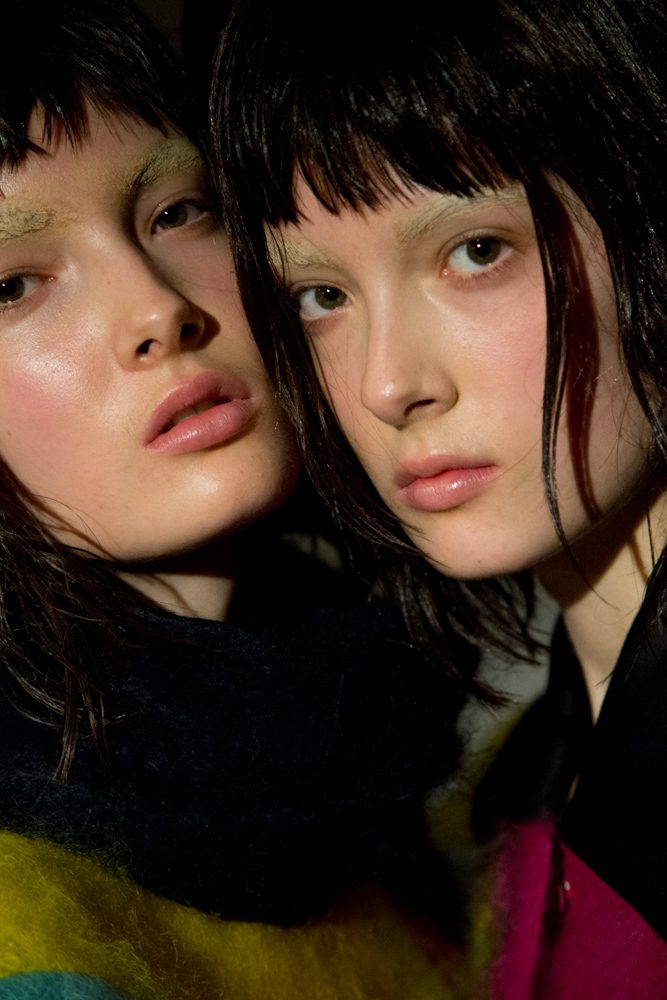
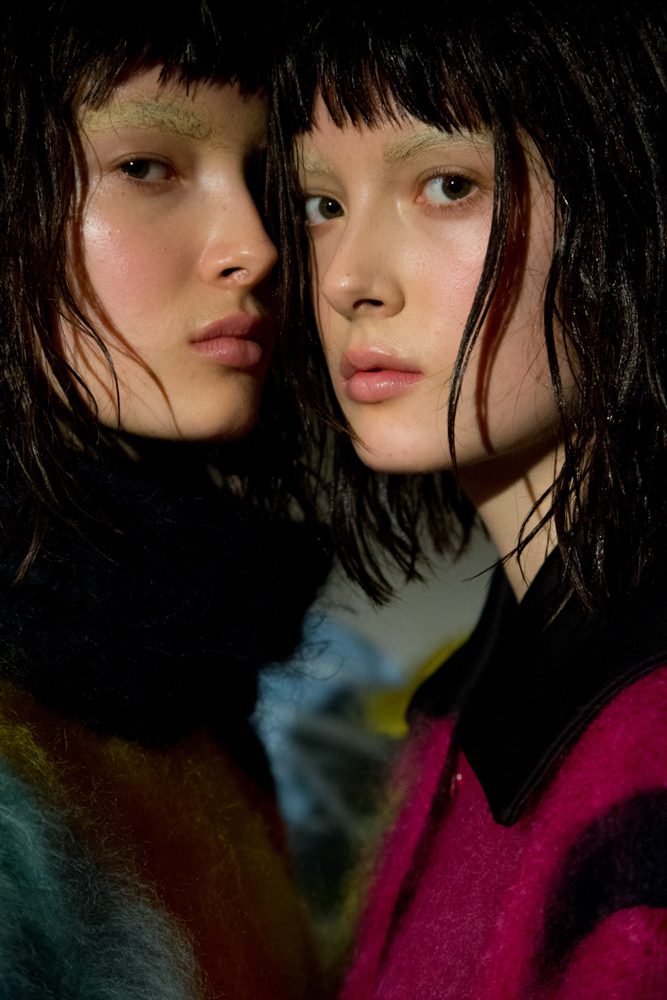
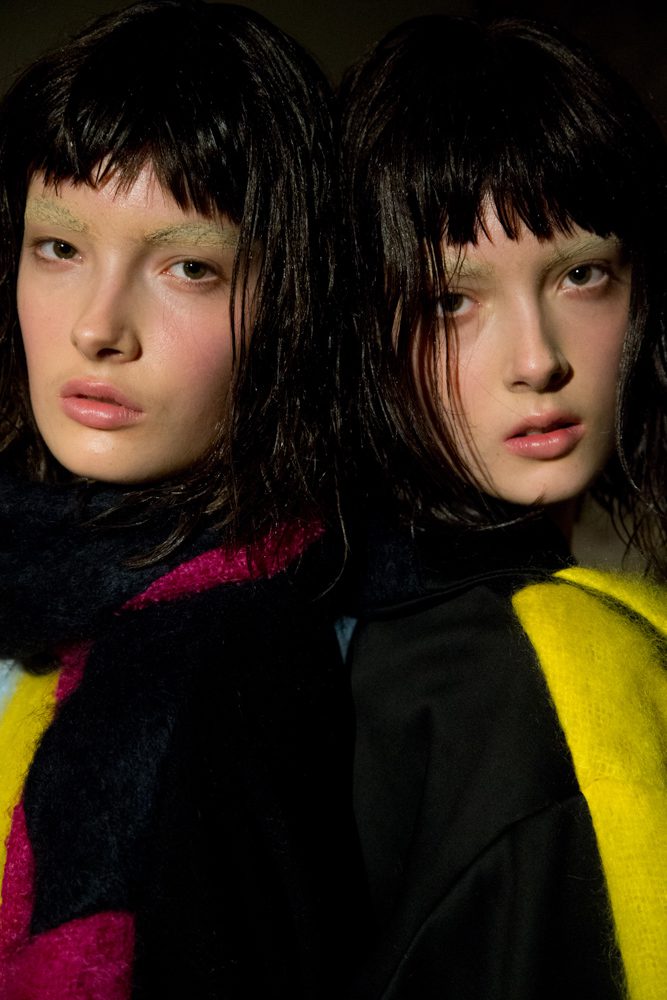
CARRO Studio’s photography captures the visual personality of the collection through silhouette, texture and movement. The camera preserves the relationship between the oversized forms and the fine, colourful details that hang from them, while individual frames reveal the construction and styling of each look. The photographs also highlight the contrast at the heart of Minki Cheng’s work: softness alongside attitude, youthful humour alongside sophistication, and familiar clothing shapes transformed through unexpected materials and decoration.
Fashion as a Daydream
Minki Cheng’s collection felt like a fashion daydream, colourful, slightly surreal and deliberately free from conventional restraint. Fishing lines became decoration, lures became graphics and movement became part of the clothing itself. The result was a collection built around personality. Rather than simply dressing a woman, Cheng imagined a character with curiosity, humour and a desire to escape the ordinary, a woman whose wardrobe could be as unpredictable as she was.
0 Comments