
Youth in Blue
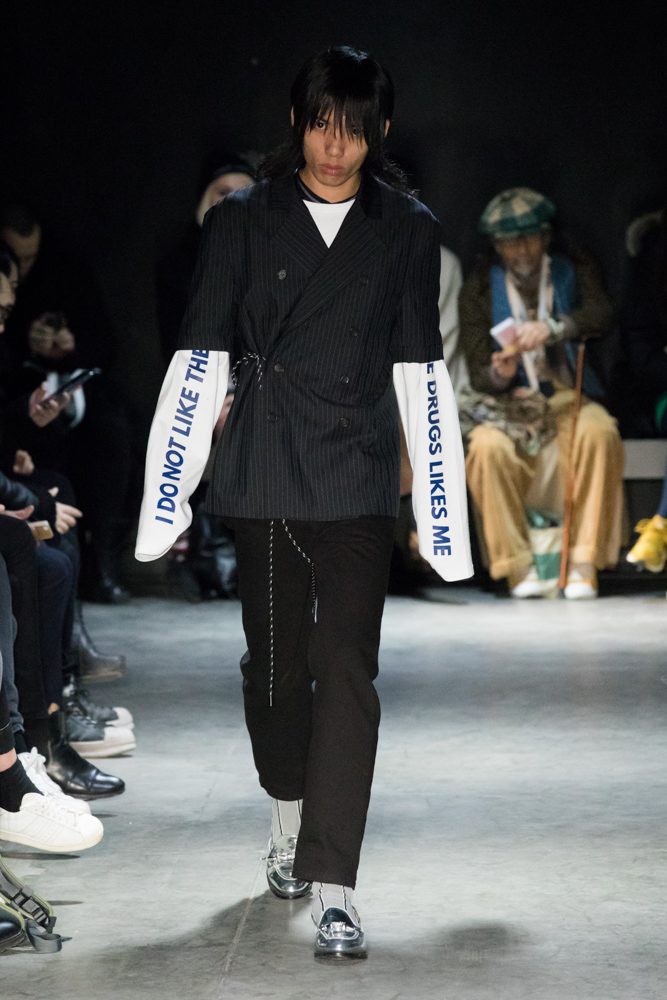
Christian Dada brought together Japanese precision, Dadaist experimentation and the restless energy of youth culture in a menswear collection built around the colour blue. Designed by Masanori Morikawa, the collection transformed familiar menswear staples through deconstruction, layering, asymmetry and unexpected fabric combinations. For CARRO Studio, the catwalk offered a striking visual study in proportion and contrast, classic jackets transformed into wrap garments, outerwear extended into tunic-like shapes and traditional pieces disrupted by graphic text, exposed construction and unconventional layering.
Blue as a State of Mind
Blue provided the starting point for the collection. In Japanese culture, the colour can carry associations with youth and its more troubled or rebellious emotions, and Christian Dada used that idea as a foundation for a collection that felt introspective, restless and defiant. Different shades of blue moved through the collection alongside black, grey, white and darker earthy tones, giving the runway a controlled palette while allowing the unusual construction of the garments to become the focus.
Deconstructing the Classics
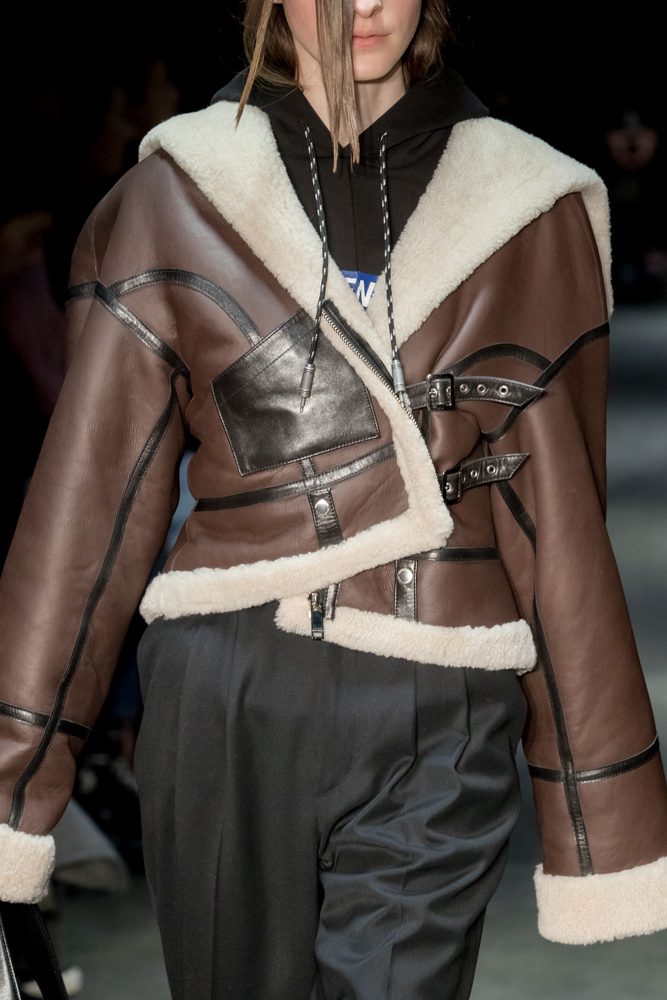
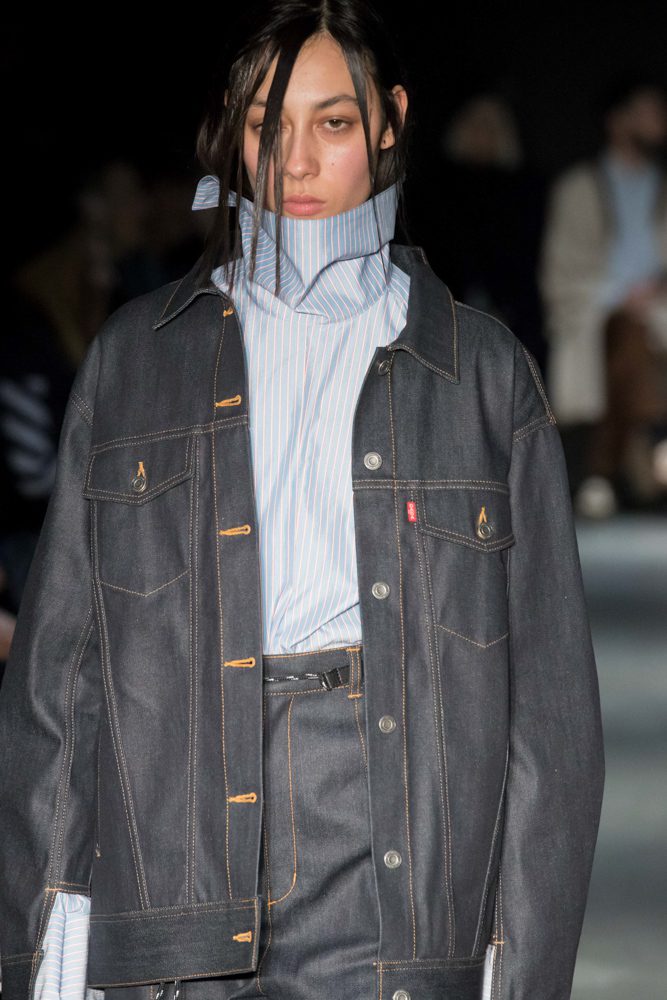
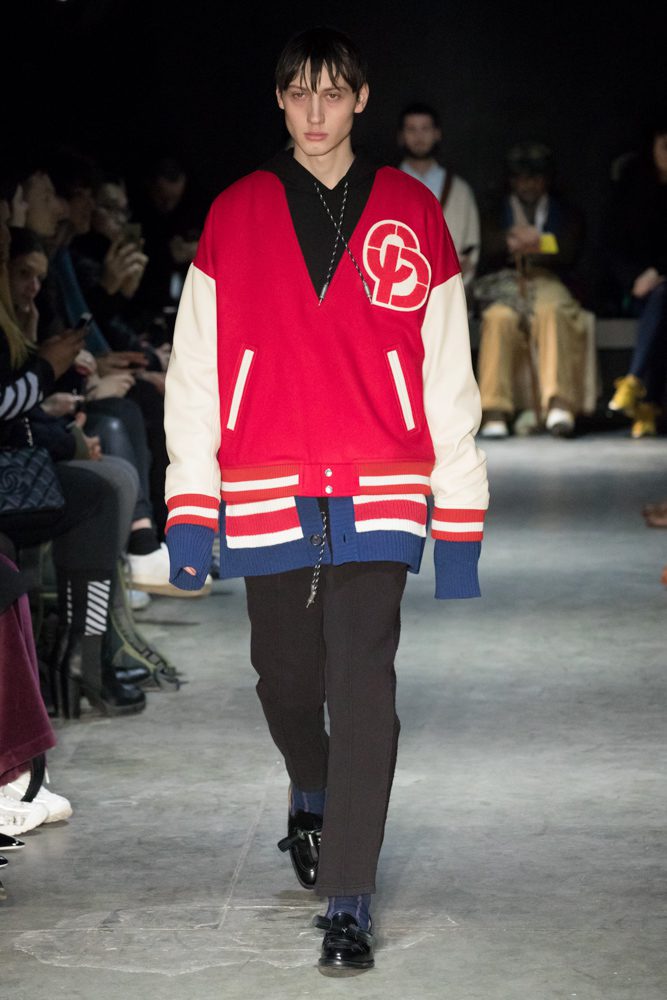
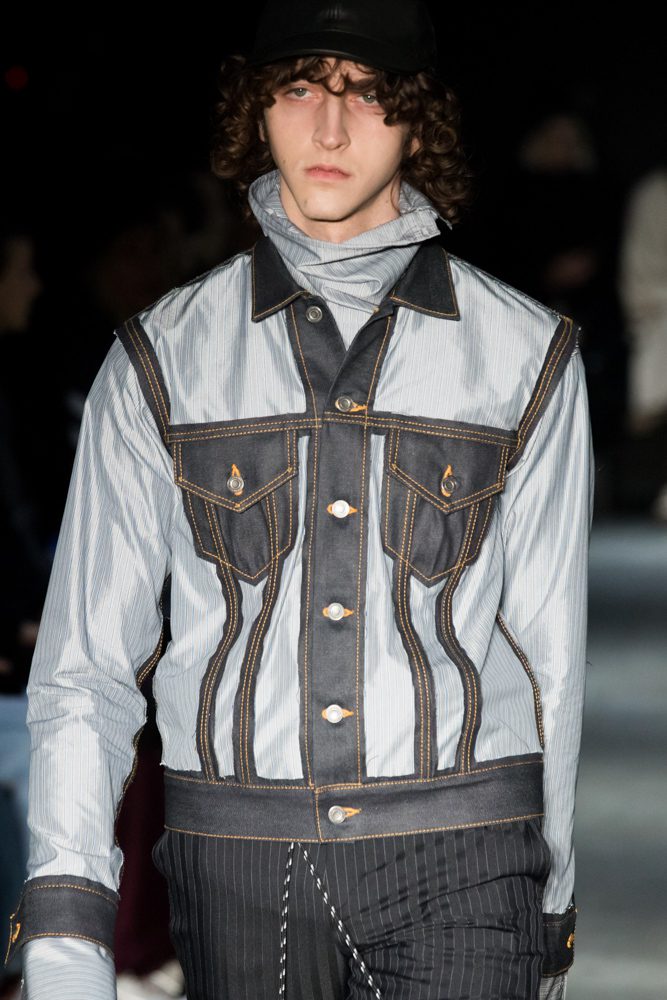
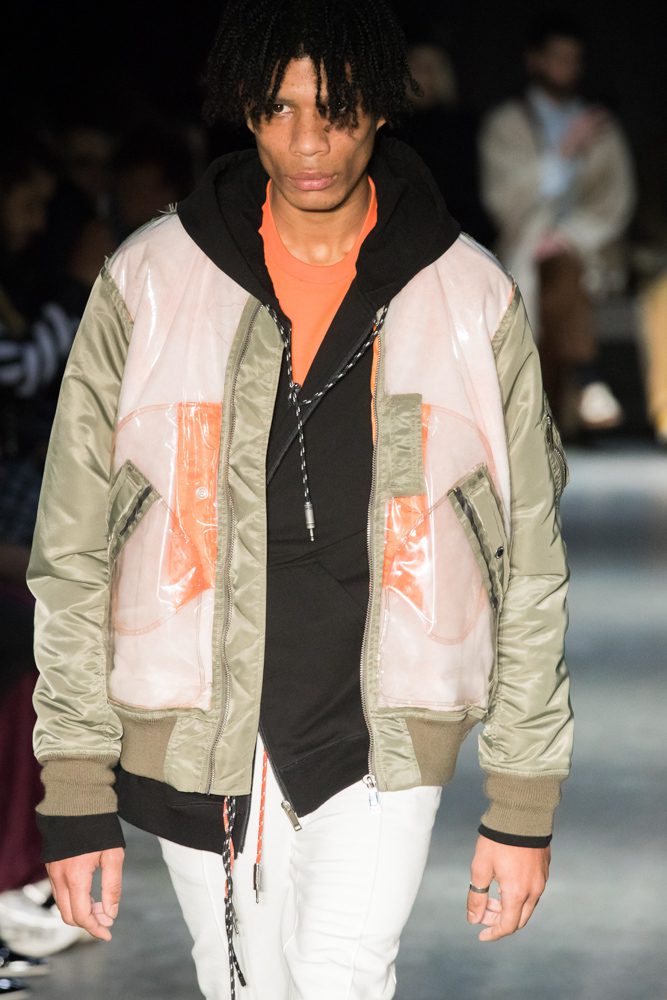
One of the strongest aspects of the collection was the way familiar menswear was taken apart and reconstructed. Tailored jackets could be wrapped almost like kimono garments, while trench coats were transformed into tunic-like silhouettes. Traditional military-influenced pieces, denim jackets and bombers were also stripped back to expose layers and construction beneath the surface. The effect was deliberately unconventional, but the starting point remained recognisable. Christian Dada was not abandoning classic menswear; it was questioning what those classics could become.
East Meets Dada
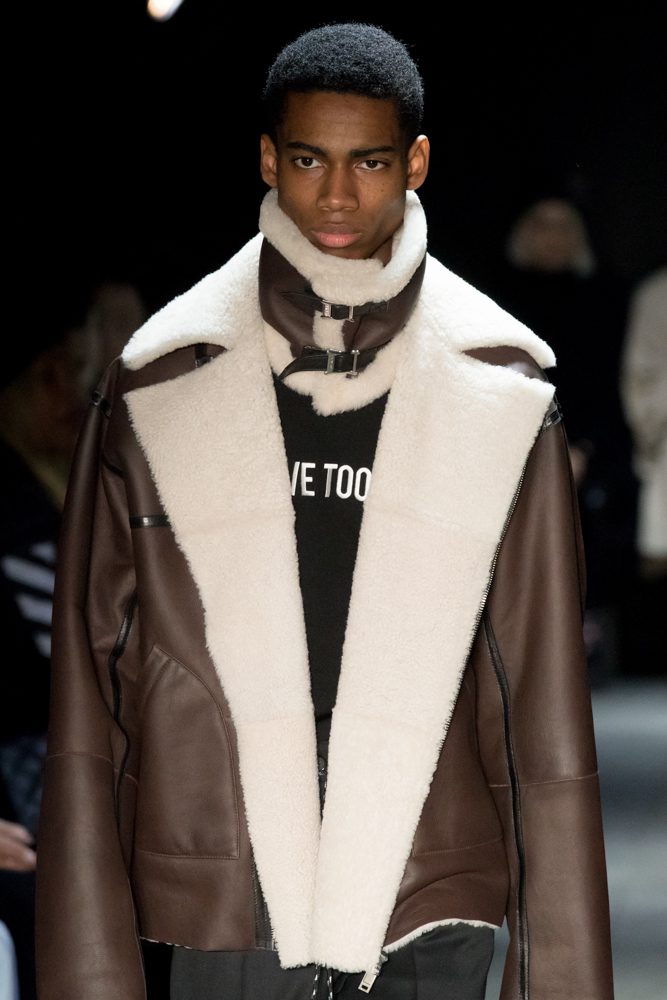
Japanese references appeared throughout the collection, particularly through the reinterpretation of traditional clothing. The Japanese summer garment known as the jimbei was translated into leather, while traditional silhouettes were combined with tartan, sheepskin and contemporary tailoring. This meeting of heritage and experimentation is central to Christian Dada’s visual identity. Traditional Japanese forms become starting points for something distinctly modern, while European Dadaism supplies the sense of disruption.
Layering and Proportion
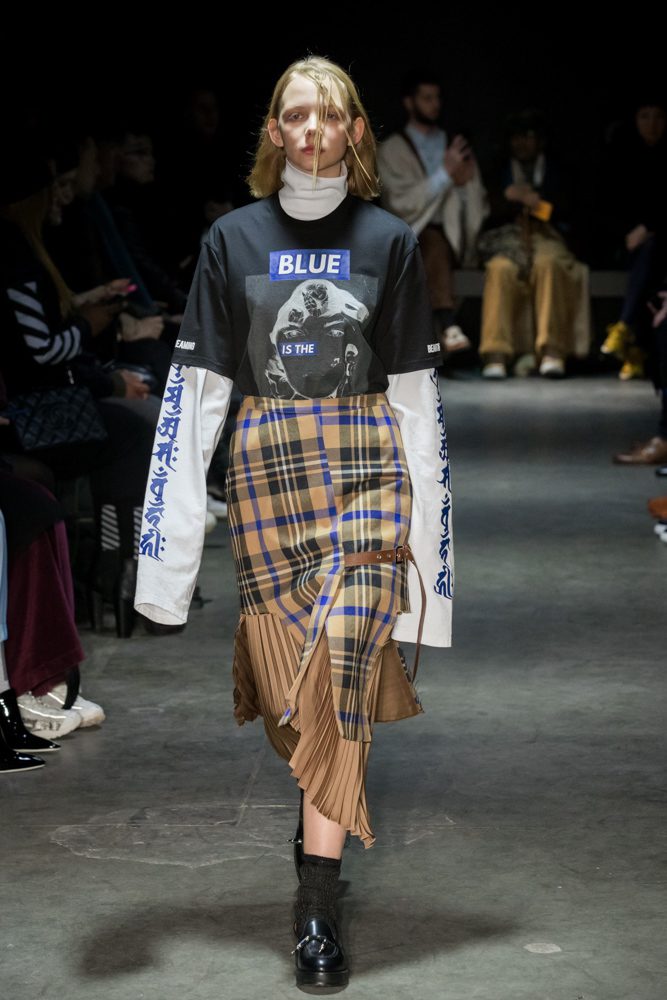
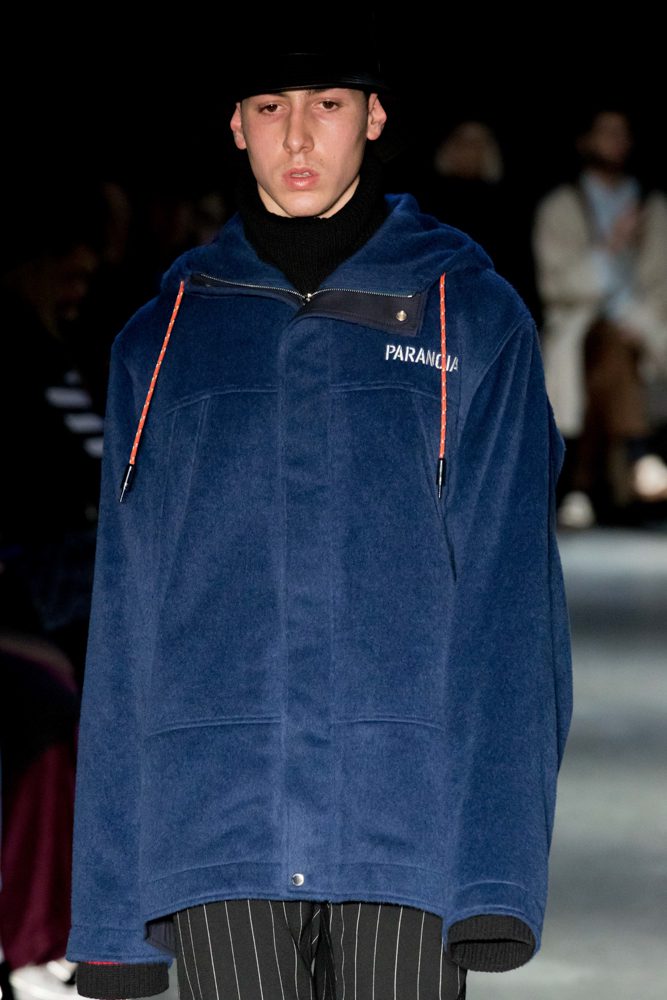
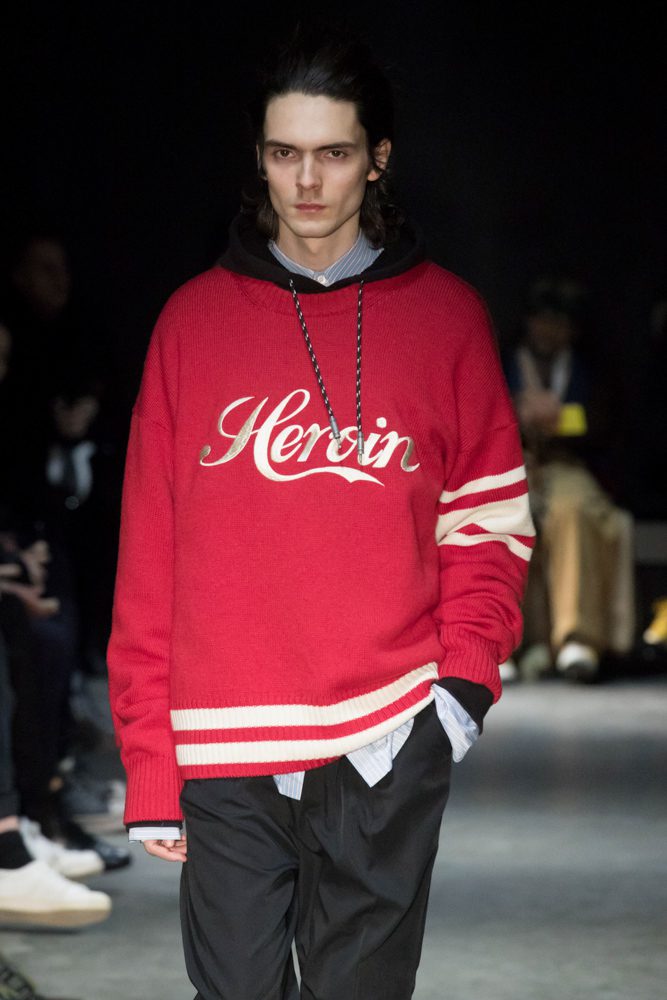
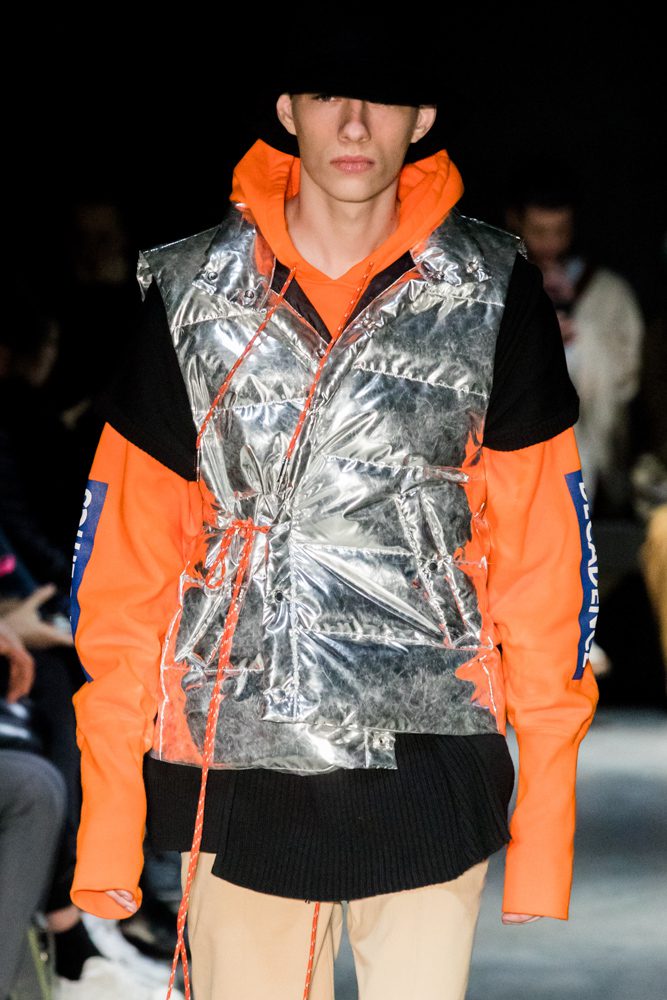
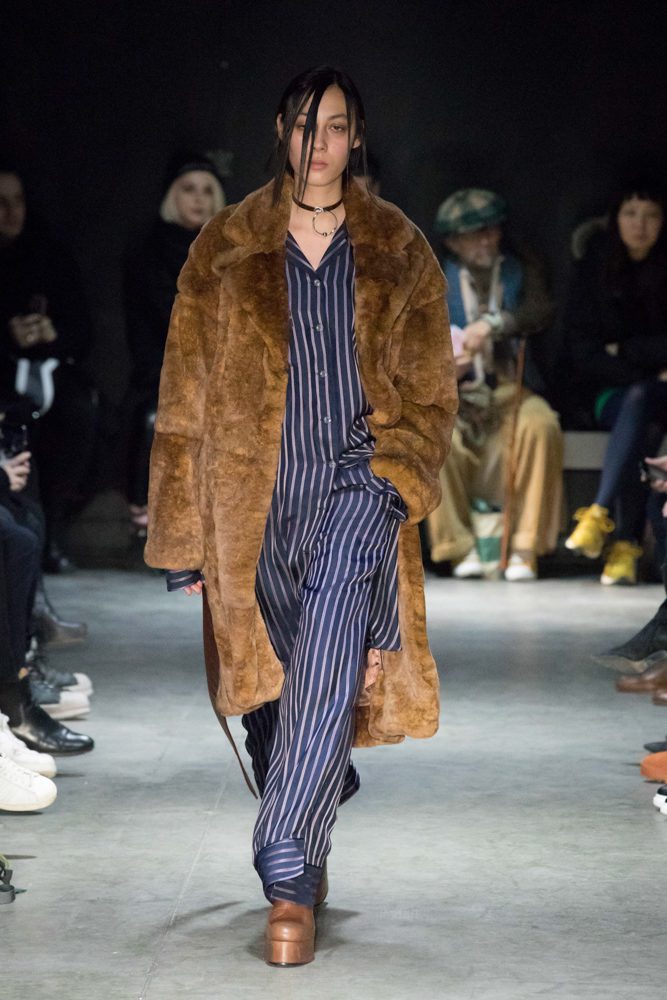
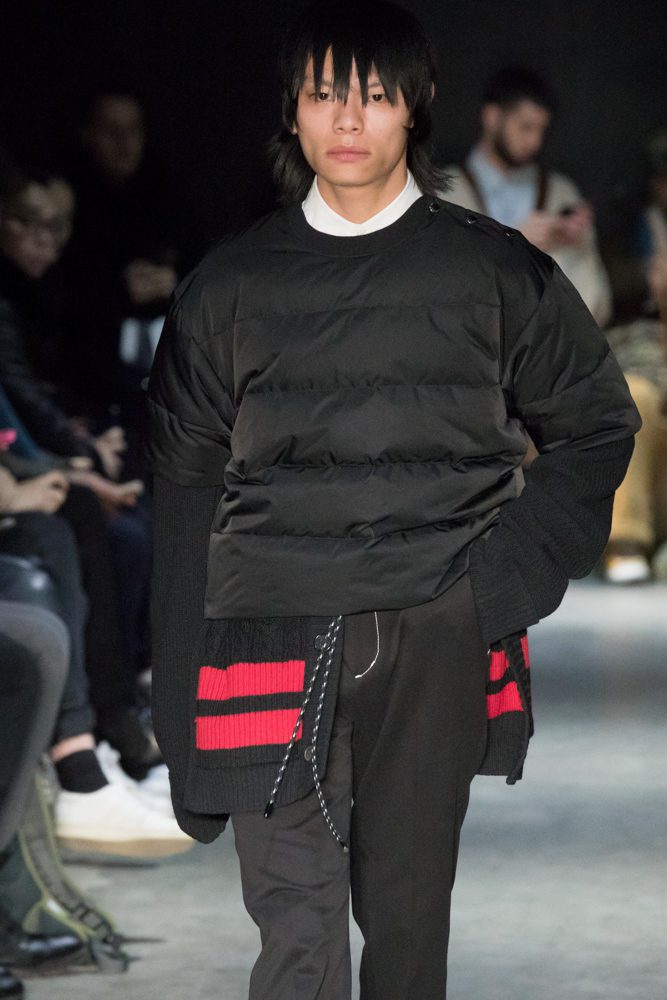
Layering created much of the collection’s visual depth. Shirts, striped pyjama-inspired pieces, T-shirts, tailored jackets, coats and outerwear were combined in unexpected ways. The silhouettes frequently moved between relaxed and structured. A soft, loose garment could sit underneath a sharply constructed coat, while a traditional tailored piece might be worn in a completely different way. That push and pull between structure and looseness gives the clothes their distinctive catwalk presence.
Words Become Part of the Clothes
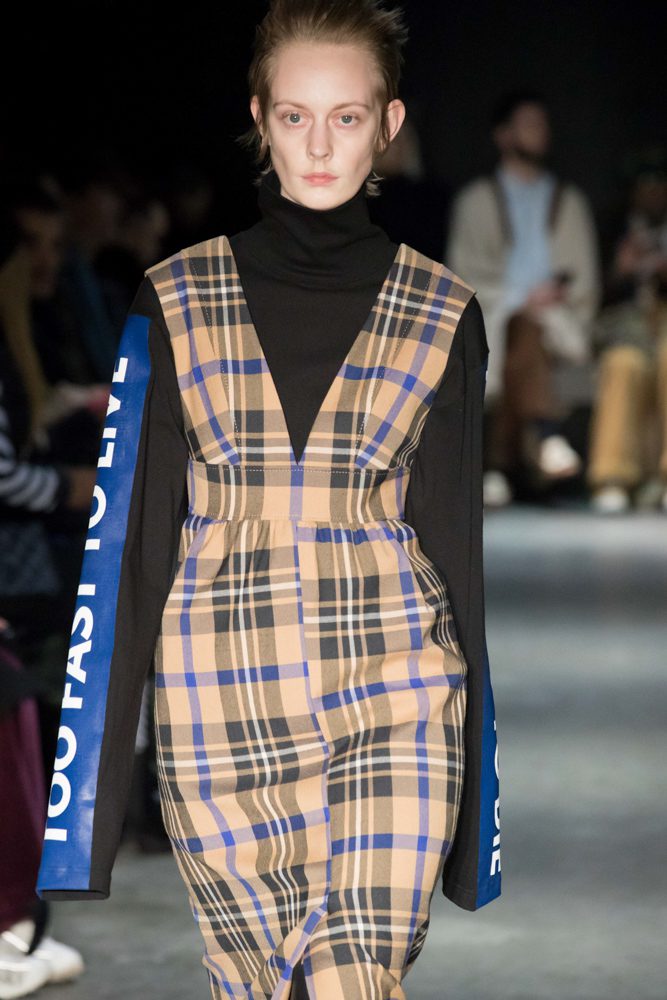
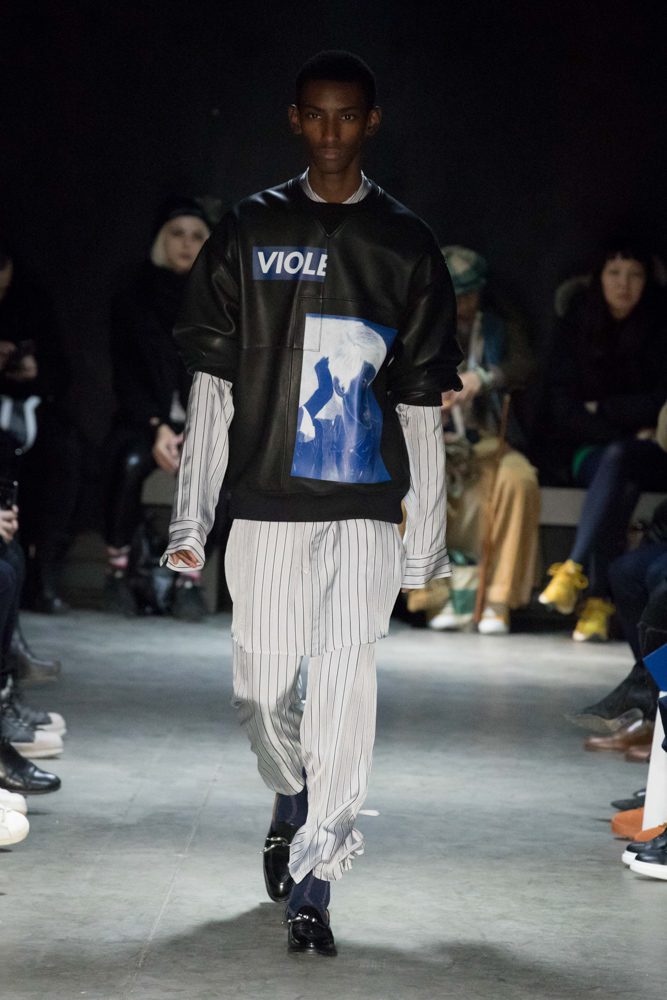
Graphic text played an important role in the collection, turning garments into something closer to visual statements. Phrases including “I Don’t Like Drugs but Drugs Likes Me” and “Too Fast to Live Too Young to Die” appeared across the clothing, adding a rebellious, almost punk quality to the otherwise carefully constructed garments. The words become another form of surface design, something that can be read as the model moves past, making the clothing feel connected to music, youth culture and street expression.
Schoolboy References with a Japanese Perspective
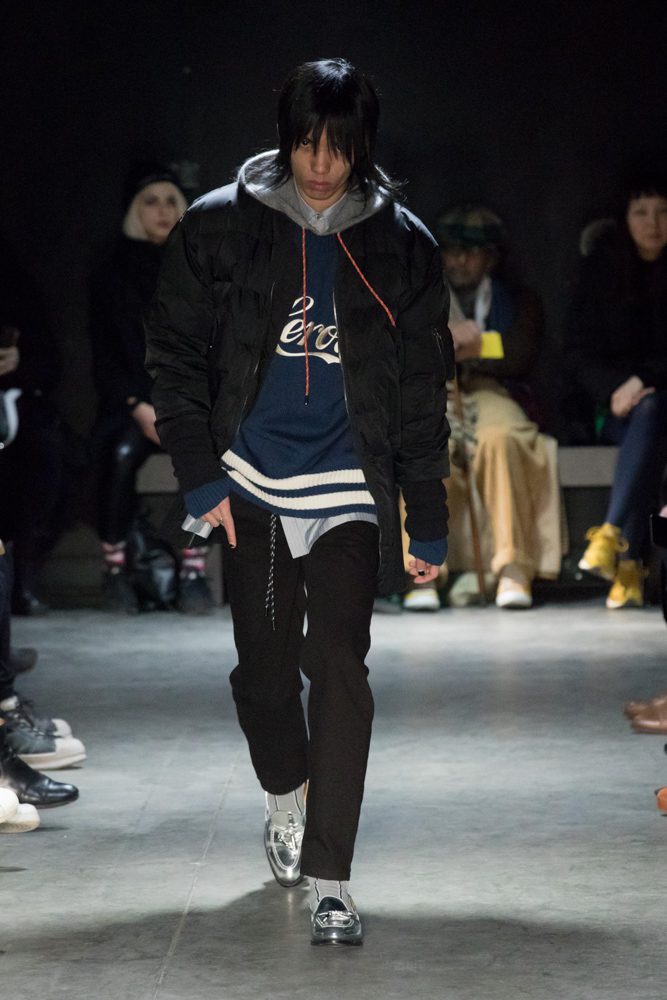
There was also a deliberately youthful quality to the styling. Tartan, sheepskin and traditional schoolboy references were filtered through Christian Dada’s Japanese perspective, creating a look that felt nostalgic and rebellious at the same time. This sense of adolescence is important to the collection’s atmosphere. It is less about conventional maturity and more about the uncertainty, experimentation and intensity associated with youth.
Craft Beneath the Rebellion
Although the collection carries an intentionally rebellious surface, there is considerable precision beneath it. The combination of tailoring, traditional Japanese forms, leather, sheepskin, tartan and layered construction requires careful control of proportion and fabrication. The contrast between rougher materials and precise cutting creates much of the collection’s visual tension. The clothing therefore operates on two levels: immediately expressive on the runway, but increasingly detailed when examined closely.
CARRO Studio Behind the Lens
CARRO Studio’s high-resolution catwalk photography captures the collection through its strongest visual elements; movement, layering, texture and silhouette. The photographs reveal how a traditional jacket can become something more sculptural when wrapped differently, how layers alter the body and how graphic words become part of the overall composition. The runway also gives the collection an important sense of movement. Coats open as models walk, loose layers shift around the body and longer silhouettes create changing shapes from one frame to the next.
Fashion with a Rebellious Spirit
Christian Dada’s collection demonstrates how menswear can be transformed without abandoning its foundations. Tailoring, military clothing, traditional Japanese dress and schoolboy references are all present, but each is disrupted and reconstructed. Through CARRO Studio’s lens, that process becomes particularly clear: classic menswear is taken apart, layered, distorted and rebuilt into something youthful, expressive and unmistakably Christian Dada.
0 Comments