
Elegance in Detail
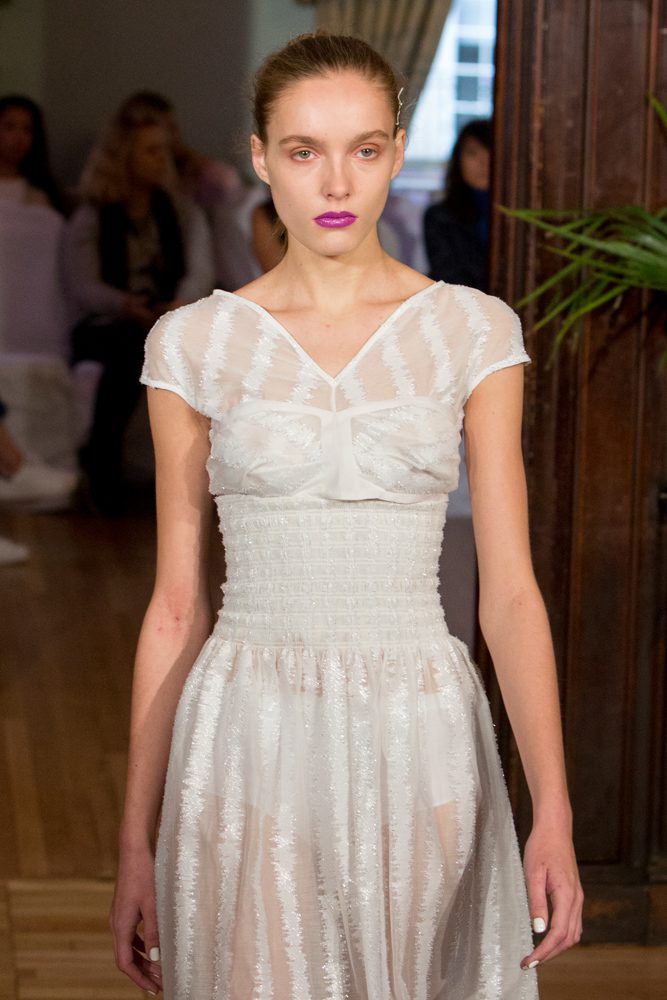
Emilio de la Morena has always had a distinctive understanding of femininity, combining sculptural silhouettes with a sophisticated appreciation of fabric, colour and detail. His work can move effortlessly between elegant simplicity and elaborate decoration, but at its strongest, the beauty comes from allowing the construction and material of the garment to speak for itself. This collection embraced that more restrained approach, presenting a series of sophisticated dresses and separates where texture, proportion and carefully placed decoration created the visual interest. The result was feminine, polished and unmistakably designed for occasion dressing.
The Beauty of Simplicity
The collection was built around a relatively clear idea: beautiful dresses with the emphasis placed on their essential qualities. Rather than overcrowding the silhouettes, de la Morena allowed the fabrics and construction to become the focus. Clean A-line shapes, fitted dresses and elegant separates provided a refined foundation for more distinctive textile treatments. This restraint gave the individual garments greater impact. A simple silhouette could become something much more memorable through an unusual fabric, subtle transparency or a carefully considered surface detail.
Fabric as the Starting Point
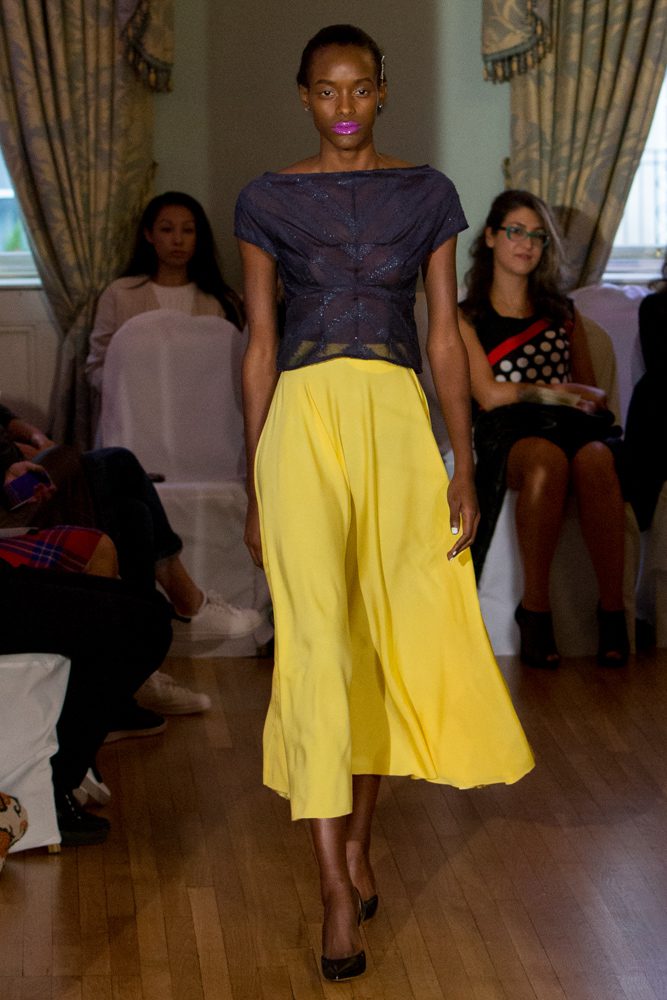
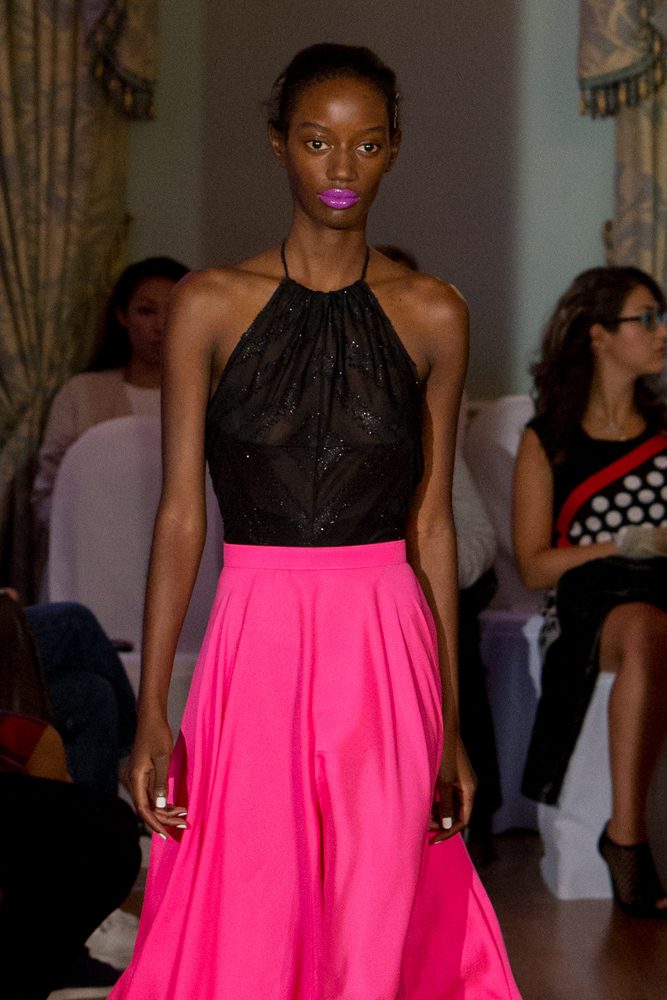
Texture was particularly important. Cream jacquard brought a tactile, almost organic quality to a polished pencil silhouette, while semi-transparent black gazar introduced sensuality without requiring excessive decoration. Soft pink and yellow silks provided another dimension, their fluid drape creating a sense of lightness and movement. These fabrics demonstrate one of de la Morena’s strengths: the ability to make material itself part of the design. The cut may be relatively straightforward, but the way a fabric catches light, follows the body or moves around the figure gives the garment its character.
Geometric Femininity
Geometry remained an important element within the collection. Structured lines and controlled silhouettes were softened by the movement of the fabrics, creating an interesting balance between precision and femininity. The garments could feel architectural without becoming rigid. This contrast is particularly effective in photography. A clean neckline or sharply defined seam can become a graphic element, while flowing fabric introduces movement into the frame.
Colour and Metallic Detail
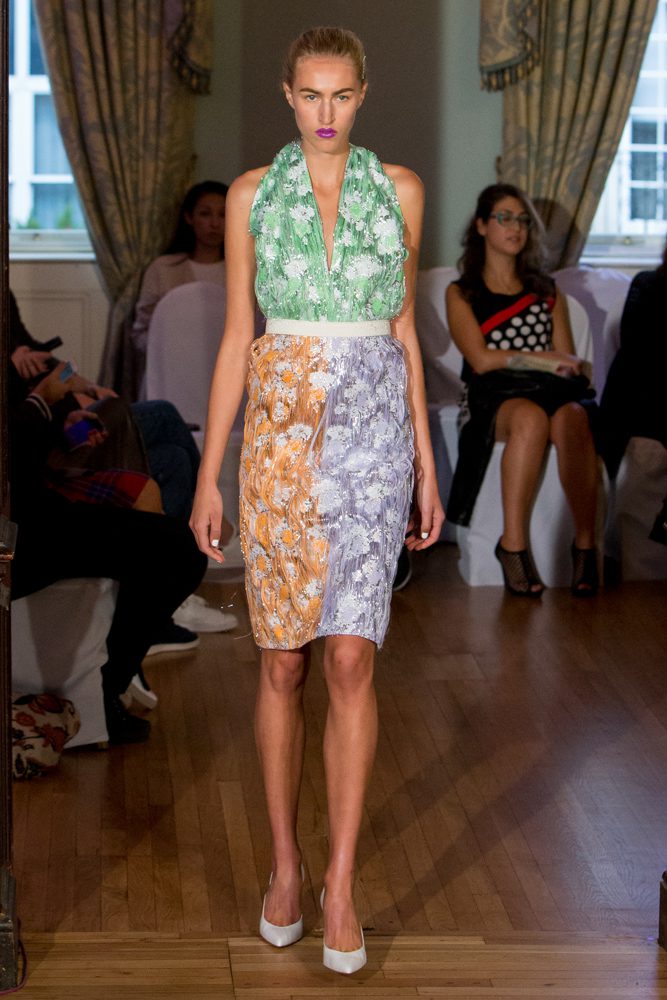
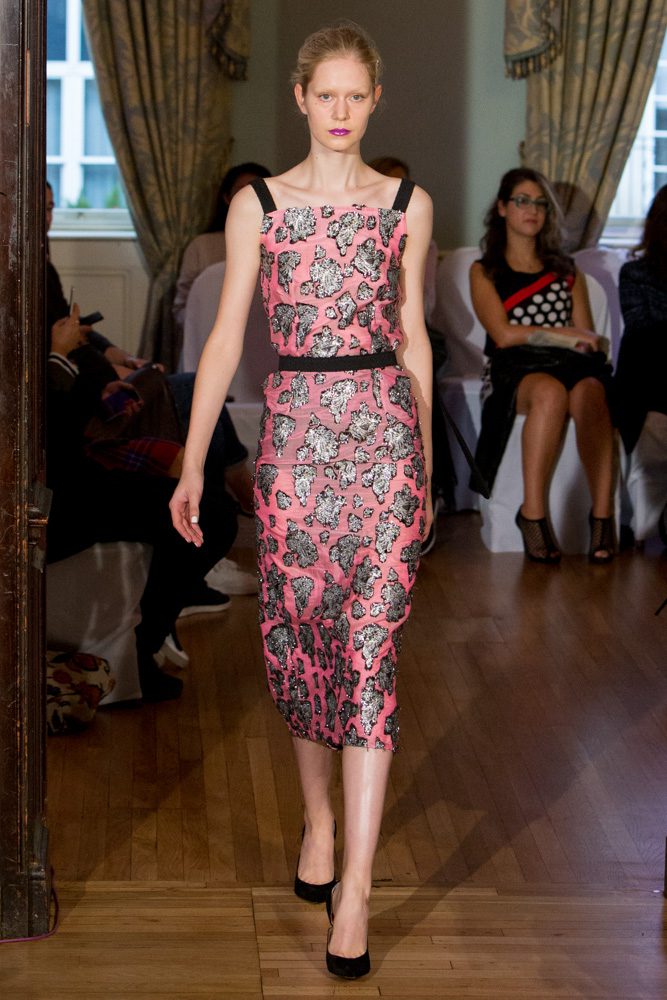
Against the more restrained silhouettes came moments of colour and embellishment. Pastel tones provided a soft foundation, while metallic brocade patches introduced a stronger visual presence. De la Morena described the embroidered motifs as “mountain flowers”, with their arrangement creating an effect reminiscent of animal markings. A green-toned organza brocade, meanwhile, incorporated exposed metallic filaments for a subtly unusual finish. The decoration worked because it remained closely connected to the fabric and silhouette. Rather than overwhelming the dress, it gave particular pieces a distinctive surface and sense of depth.
The Fashion Portrait
For CARRO Studio, these qualities provide rich material for fashion portraiture. A portrait allows the viewer to appreciate the relationship between the garment and the person wearing it. The cut of a dress, the texture of a fabric and the placement of embellishment can all become part of the composition. The restrained silhouettes are particularly suited to this approach. Without excessive styling competing for attention, the photograph can focus on the garment itself; its lines, its texture and its relationship with the model.
CARRO Studio Behind the Lens
CARRO Studio’s photography captures the character of the collection through a combination of portraiture and fashion detail. The camera draws attention to the craftsmanship within the garments: the texture of jacquard, the transparency of gazar, the fluidity of silk and the reflective quality of metallic decoration. At the same time, the portraits preserve the elegance and attitude of the collection. The model becomes part of the composition, allowing the clothes to be seen not simply as individual pieces but as a complete expression of de la Morena’s aesthetic.
Modern Femininity
The collection demonstrated the power of restraint. By reducing unnecessary elements, Emilio de la Morena allowed fabric, shape and detail to carry the story. The result was sophisticated occasionwear with a strong sense of femininity; dresses that could be elegant without being predictable, and decorative without losing their clarity. Through CARRO Studio’s lens, these qualities become especially apparent. The photographs preserve the texture, movement and construction of the garments, creating a visual record of a collection where simplicity becomes its own form of luxury.
0 Comments